
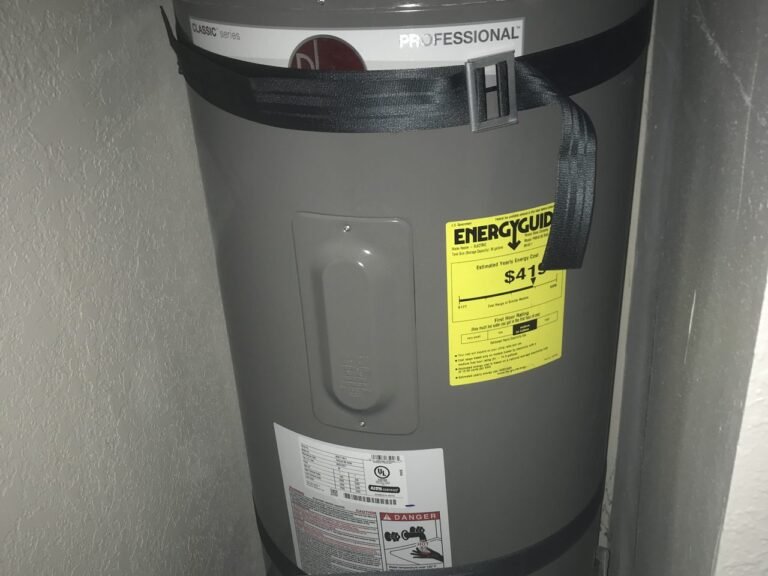
Electric Water Heater Repair in Fort Collins and Loveland
Failed elements, thermostats, reset buttons and breakers that keep tripping, diagnosed and repaired.
- Honest repair-or-replace advice
- Written, itemized quotes
- Licensed and insured
Photo: Steven Pavlov, CC BY-SA 4.0, via Wikimedia Commons
Fort Collins Water Heater Pros repairs electric water heaters in Fort Collins, Loveland and across Larimer County. Our licensed plumbers test and replace heating elements, thermostats and high-limit switches, find out why a breaker or reset button keeps tripping, and say plainly when replacement makes more sense. You get a written, itemized quote before work starts.
Call (970) 305-5633 to book a repair. If the breaker or reset button has tripped twice, leave it off until the heater is tested.
Call nowChoose your area
Permits, water and energy providers differ by town. Pick yours:
Electric water heater problems: symptom, likely cause and what we do

| What you notice | Likely cause | What we do |
|---|---|---|
| No hot water at all | Tripped breaker or high-limit (ECO); failed upper element or thermostat | Check voltage; find why it tripped; replace the part |
| Hot for a few minutes, then lukewarm | Failed lower element or lower thermostat | Test both; replace the failed one |
| Slow to heat back up | Lime around the elements; loose wire; failing thermostat; wrong-wattage element | Clean or replace elements; tighten wiring |
| Water too hot, or the reset trips again | Grounded element; thermostat not flush with the tank; failed thermostat | Ground-test the elements; reseat or replace the thermostat |
| Breaker trips as soon as it’s reset | Element shorted to ground; wiring fault | Leave it off; test elements and wiring |
| New element dead within seconds | Dry fired: powered before the tank was full | Replace it; refill and purge air first |
| Singing or hissing while heating | Lime on the elements | Remove and clean or replace them |
Causes follow Bradford White’s electric service manual and A.O. Smith; for first checks, see no hot water troubleshooting.
What we check on an electric water heater
- Power: voltage at the heater and a breaker that matches the rating plate.
- High-limit (ECO): whether it tripped, and why.
- Elements: resistance (Bradford White’s spec for a 4,500-watt, 240-volt element is 12.8 ohms, plus or minus 6%) and any continuity to the flange, which means the element is grounded.
- Thermostats: that each one switches on and off.
- Wiring: tight, corrosion-free connections.
How the upper and lower elements and thermostats work together
Most whole-house electric tanks run on 240 volts with two elements, each under its own thermostat. In the standard setup only one heats at a time: from cold, the upper element heats the top third of the tank, then power switches to the lower element for the rest (A.O. Smith). The lower element cycles more often, since cold water enters at the bottom, and the upper thermostat takes power back after a big draw (Bradford White). Both thermostats read the tank’s surface temperature, so each must sit flush against the steel (Bradford White).

The reset button: why the high-limit trips
The red reset button sits on the upper thermostat, behind the top access panel. It resets the high-limit switch (ECO), which cuts power to the elements if the water overheats, at 170°F on a standard A.O. Smith model. A.O. Smith’s steps: breaker off, panel off, press firmly until it clicks, power on. A click means the water really overheated.
Repeated trips usually mean a grounded element, says Bradford White’s service manual: one with a short to ground may not draw enough current to trip the breaker, so it keeps heating with only the ECO to stop it. A thermostat that isn’t flush with the tank, or a failed one, can do the same.

Why does the water heater breaker keep tripping?
Usually a grounded element or a wiring fault. Bradford White says a grounded element will in most cases trip the breaker, and A.O. Smith lists shorts, loose wires and grounded elements as the checks after a trip. We disconnect each element and test from its terminals to the flange, then check the junction box and thermostat terminals. If it trips again after one reset, leave it off.
Dry firing: why a new element burns out in seconds
Powering an element that isn’t fully under water, called dry firing, burns it out immediately (A.O. Smith). The usual cause is turning the breaker on before the tank refills, but Bradford White notes that lime around an element can trap an air pocket and dry fire it within seconds. After every element change, we refill and purge the air before restoring power.

Sediment and the lower element
As hard water heats, its minerals settle as scale in the bottom of the tank (A.O. Smith) and can build up around the lower element. Most water here is soft (Loveland Water and Power’s 2025 report averages 24 mg/L), so heavy scale is less common, but sediment still collects in older tanks. Scale keeps an element from passing heat to the water, so it overheats again and again until its sheath cracks or splits (A.O. Smith). Bradford White traces slow recovery and singing or hissing elements to lime buildup. If yours rumbles or hisses, see why a water heater is making noise.
240-volt safety: power off and test first
A.O. Smith warns that the voltage can kill and that parts stay live even when the heater isn’t heating; Bradford White’s wiring keeps one side of each element energized whenever the ECO is closed. Turn the breaker off and confirm with a voltage tester that the terminals are dead before touching anything. Let the heater cool before opening panels or draining it (A.O. Smith). Element and thermostat work is a job for a licensed plumber.
Repair or replace an electric water heater?
Elements and thermostats are inexpensive parts, so a sound tank is usually worth repairing. Replace one that leaks, has been flooded (A.O. Smith) or keeps failing with age; Angi’s July 2026 guide says electric tanks may last 10 to 15 years.
Since January 1, 2026, new 40 to 120 gallon electric storage water heaters (12 kW or less) sold in Colorado must have a demand-response port compliant with AHRI 1430 (C.R.S. 6-7.5-105(5)(d)), heat pump models included, per Rheem. The port links the heater to utility demand-response programs; the law requires the port, not enrollment, and doesn’t touch repairs.
A heat pump water heater is the efficient replacement. ENERGY STAR estimates a certified model saves a household of four about $550 a year over a standard electric tank. It belongs in a space that stays between 40°F and 90°F with 1,000 cubic feet of air. Colorado’s tax credit for installs since January 1, 2026 is $250, with at least $83 off your invoice (Colorado Energy Office). For a straight swap, see water heater replacement in Fort Collins.
What electric water heater repairs cost
Angi’s national repair cost guide (updated December 17, 2025) puts a heating element replacement at $200 to $300, with the part $15 to $60, and an electric thermostat at $150 to $200, with the part up to $20. These are national figures; your written quote sets the price.

What happens when you call
- Call (970) 305-5633 with the tank size, age and what the breaker and reset button are doing.
- Diagnosis with the power off and verified: elements, thermostats, ECO and wiring.
- A written, itemized quote before work starts.
- The repair, with an element matching the rating stamped on the old one.
- Refill and test: tank full and purged before power, then heating checked.
Every job is done by licensed plumbers and covered by liability insurance. For gas heaters, see gas water heater repair; for leaks and tankless units, water heater repair in Fort Collins.
Electric water heater repair FAQ
Is it safe to press the reset button on my electric water heater?
Only with the breaker off, and only once. If it trips again, leave it off: repeat trips usually mean a grounded element or failed thermostat.
Can I replace a water heater element myself?
We recommend a licensed plumber, since it means 240 volts and draining a hot tank. Whoever does it, the tank must be full before power returns.
Why did my new heating element burn out right away?
Most often it was dry fired: powered before the tank was full, or with an air pocket around it. It’s ruined within seconds.
Why is my electric water heater slow to heat back up?
A.O. Smith says electric tanks need 60 to 90 minutes to recover. Slower than that often means lime on the elements or a failing part.
Do new electric water heaters in Colorado need a demand response port?
Yes. Since January 1, 2026, new 40 to 120 gallon electric storage water heaters sold in Colorado need an AHRI 1430 port; your current tank is unaffected.
Should I replace my electric water heater with a heat pump?
If the tank is failing and you have a 40°F to 90°F space, price one; ENERGY STAR estimates about $550 a year in savings for a household of four.
What affects the cost of electric water heater repair?
Mostly labor, since parts are cheap: Angi’s December 2025 guide puts an element replacement at $200 to $300 and a thermostat at $150 to $200.
Related services
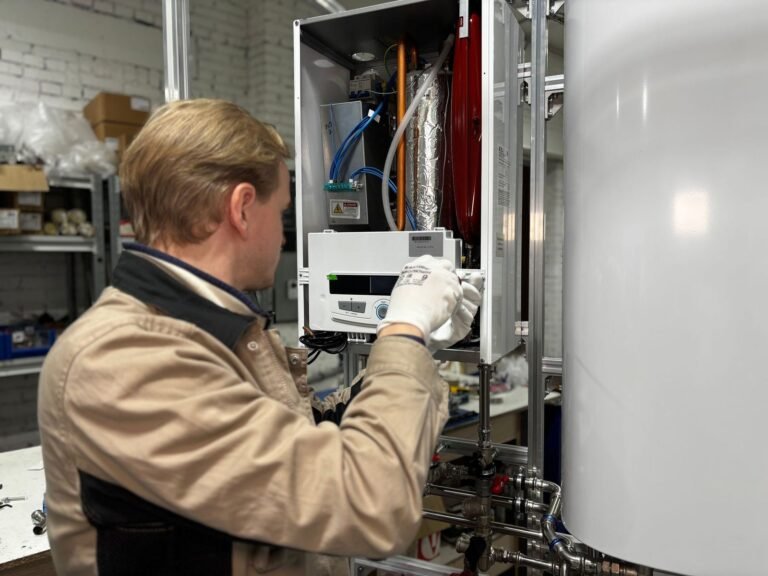
Water Heater Repair
No hot water, leaks, pilot and burner problems diagnosed and fixed.
Learn more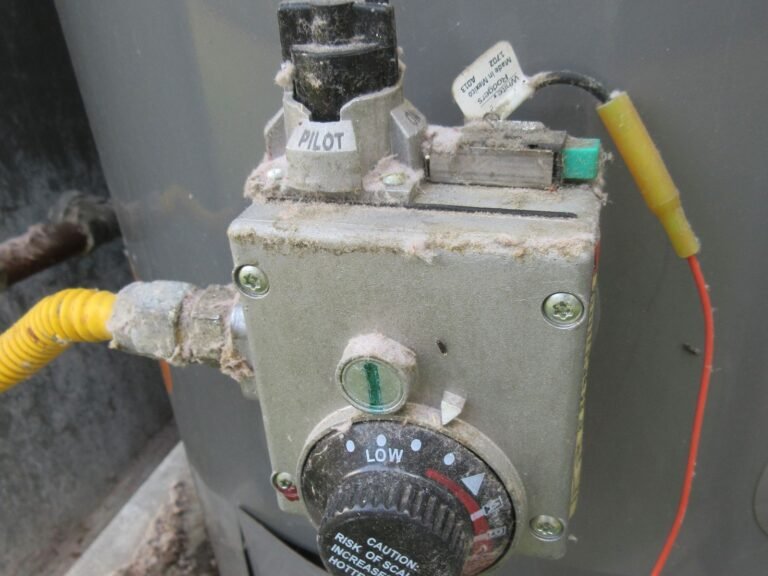
Gas Water Heater Repair
Pilot, thermocouple, gas valve, burner and venting problems fixed safely.
Learn more
Heat Pump Water Heaters
Hybrid tanks that use far less electricity, with rebates checked first.
Learn morePhoto credits (Wikimedia Commons): Gas Water Heater Repair: Infrogmation of New Orleans, CC BY-SA 4.0; Heat Pump Water Heaters: Kskhh, CC BY-SA 4.0.
Water heater trouble?
Call for a diagnosis and a written quote.
Call for electric water heater repair in Fort Collins, Loveland or anywhere in Larimer County.

Water heater replacement, repair and tankless installation for Fort Collins, Loveland and Larimer County. Written, itemized quotes and licensed plumbers.
Call (970) 305-5633