

Water Heater Installation in Fort Collins and Loveland
Gas and electric water heater installation with the expansion tank, venting, gas line and permit done right.
- Honest repair-or-replace advice
- Written, itemized quotes
- Licensed and insured
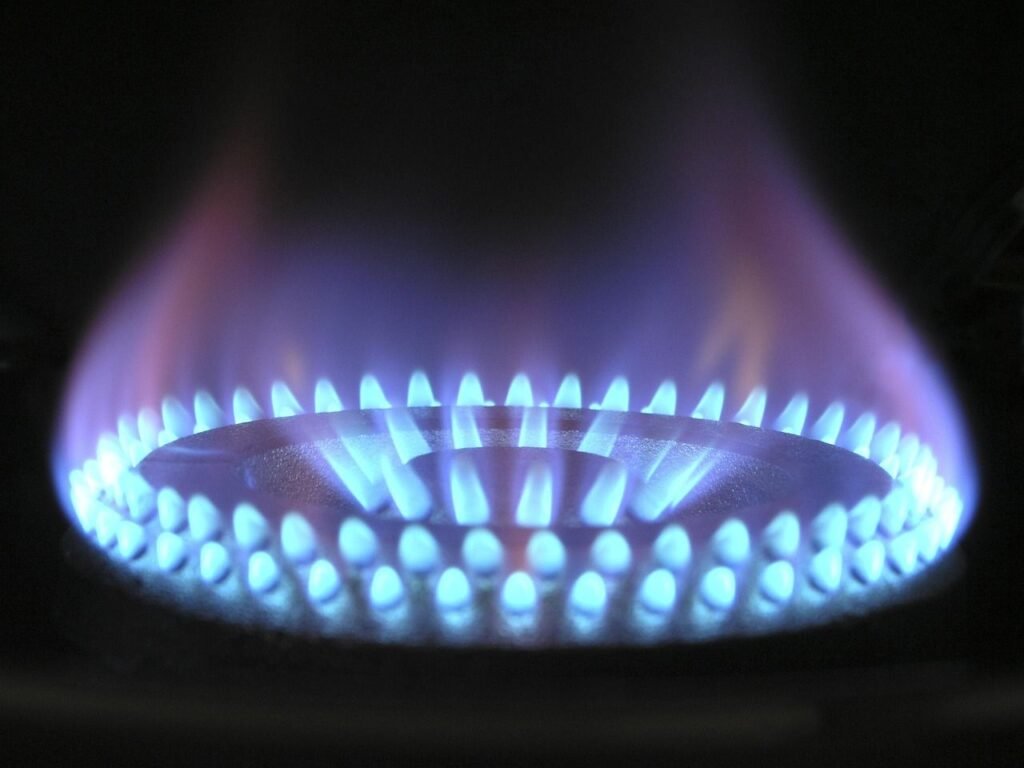
Photo: Tim Evanson, CC BY-SA 2.0, via Wikimedia Commons
Fort Collins Water Heater Pros installs natural gas, propane and electric water heaters in Fort Collins, Loveland and across Larimer County, from a straight swap of a worn-out tank to a first install in a new spot. Every water heater installation is done by licensed plumbers under a permit, with gas units set up for our altitude, and inspected by your city, town or county.
Call (970) 305-5633 for a written, itemized installation quote.
Call nowChoose your area
Permits, water and energy providers differ by town. Pick yours:
Gas, propane and electric water heater installation

We install tank water heaters on all three fuels, as replacements and as new installations:
| Water heater | Venting | What the spot needs |
|---|---|---|
| Atmospheric gas | Draft hood into a metal vent or chimney | Gas line, combustion air and a vent that drafts properly |
| Power vent gas | A blower pushes exhaust out, often through plastic pipe | Gas line, combustion air and usually an outlet for the blower |
| Direct vent gas | Sealed burner, usually vented through a nearby wall | Gas line and a suitable exterior wall |
| Propane | Same vent types as natural gas | A heater built for propane or converted with the maker’s kit |
| Electric | None | A dedicated 240-volt circuit on most models |
See power vent and other water heater venting types for the vent choices. Tankless water heater installation and heat pump water heater installs bring their own gas, venting and space needs, so each has its own page. If your old tank has already failed, start with water heater replacement in Fort Collins.
What a code-compliant water heater installation includes
Colorado’s plumbing and fuel gas codes build on the 2024 International Residential Code (IRC), and Fort Collins, Loveland, Larimer County and Weld County enforce 2024 editions. These are the main water heater code requirements on a tank installation.
Expansion tank installation, where your system needs one
The IRC requires thermal expansion control where a pressure-reducing valve (P2903.4.1) or a check valve or backflow preventer (P2903.4.2) stops heated water from expanding back toward the main. Not every home has those devices, so we check before quoting a tank. Colorado’s plumbing code and Larimer County add that the tank must be supported as its manufacturer specifies, not hung from its pipes. See do I need a water heater expansion tank.
T&P relief valve and discharge pipe
Every tank needs a temperature and pressure (T&P) relief valve that opens at no more than 150 psi or 210°F, with no shutoff or check valve on either side (IRC P2804). Its discharge pipe must be full size, drain downhill with no trap, valve or tee, and end, unthreaded, no more than 6 inches above the floor, pan or drain receptor.
Colorado’s plumbing code now also requires relief valve discharge to be piped to a drain or outdoors, but replacements of existing water heaters are exempt, and Fort Collins adopted the same rule. Never cap or plug a T&P valve.
Drain pan
Where a leak would cause damage, the tank sits in a pan at least 1½ inches deep with a drain of at least ¾ inch to a receptor, or outdoors 6 to 24 inches above grade (IRC P2801.5). On a replacement, no pan drain is required where none existed, and Colorado and Fort Collins exempt replacements of heaters that had no pan under the code at the time.
Gas shutoff and sediment trap
Gas models need a shutoff valve in the same room, within 6 feet of the heater and upstream of the connector (IRC G2420.5.1), and a sediment trap downstream of it, as close to the gas inlet as practical (G2419.4).
Venting and the plastic vent pressure test
Plastic vent pipe is allowed only when the heater is listed for it and its instructions name the pipe material (G2427.4.1). Colorado’s fuel gas code requires new plastic exhaust pipe on a gas water heater to be tested at 5 psi of air, or a 10-foot water column, at inspection before it is connected.
Larimer County requires vent terminals at least 12 inches above the expected snow level and 22 inches above grade, and Fort Collins requires 22 inches above grade. Loveland requires an exhaust test certification for plastic venting and bans cellular core pipe on direct-vent exhaust, even existing pipe. Windsor prohibits cellular core PVC for water heater exhaust.
Combustion air
By the IRC’s standard method, a fuel-burning heater’s space needs at least 50 cubic feet of indoor air per 1,000 Btu/h of appliance input (G2407.5.1), so 40,000 Btu/h needs 2,000 cubic feet. A small closet usually falls short and needs combustion air openings or ducts, which Fort Collins requires to carry a carbon monoxide warning label.
Water heater in a garage: the 18-inch rule
In a garage, a water heater’s ignition source must be at least 18 inches above the floor unless the heater is listed as flammable vapor ignition resistant (IRC P2801.6, G2408.2). Rooms that open directly into the garage and are not living space count as garage, and Larimer County extends the rule to barns and similar utility spaces.
Altitude setup
The fuel gas code requires the volume of gas supplied to be adjusted for altitude above 2,000 feet (IFGC 402.2), and USGS elevations put Fort Collins at 5,004 feet, Loveland at 4,986 and Estes Park at 7,530. How a heater handles altitude depends on the model: one Bradford White power vent manual certifies its heater to 10,100 feet without modification, while another calls for a high-altitude kit above 2,500 feet because the blower moves less air as air density drops. We set each heater up from its manual and your home’s elevation.
CO alarms on fuel-fired replacements
Loveland’s permit application quotes Colorado law: in a single-family home with fuel-fired appliances or an attached garage, a permitted fuel-fired appliance replacement requires a working carbon monoxide alarm within 15 feet of each sleeping room entrance. Weld County’s express permit requires smoke and CO detectors when fuel-fired appliances are replaced or installed.
The rest of the checklist
The code also requires a full-open cold-water shutoff at or near the heater (P2903.10.2) and a drain valve of at least ¾ inch (P2801.1). Earthquake straps are not required by the IRC here: Fort Collins, Larimer County, unincorporated Weld County and Windsor are in Seismic Design Category B, and the anchoring rule (P2801.7) applies only in categories D0 through D2 and to townhouses in C.

Water heater permits and Colorado’s licensing rule
Every city, town and county we serve requires a permit and inspection to install or replace a water heater. The Colorado State Plumbing Board’s December 2025 memo and addendum say the work must be done by a licensed plumber working for a state-registered plumbing business under a permit, or by a homeowner doing their own work in a home that is not for sale, resale, a flip or a rental.
We pull the permit and schedule the inspection on every replacement, and our post on do I need a permit to replace a water heater covers all 16 towns we serve.

What happens on installation day
- Quote and permit. We confirm the heater, venting and code items in writing and pull the permit.
- Shutoffs and drain. Gas or power off, the cold supply closed and the old tank drained by hose. Tank water can scald, so keep kids and pets clear.
- Set the new heater. In a pan or raised in a garage where required, with a cold-water shutoff, new connectors and a new T&P discharge pipe.
- Gas, venting and expansion control. Shutoff, flexible connector and sediment trap on gas models; the vent connected, supported and pressure-tested if it is new plastic; an expansion tank on its own support where needed.
- Fill before firing. The tank fills with a hot faucet open until water runs steadily, so no air is trapped and electric elements never fire dry.
- Start-up. Lit or powered per its manual, set up for altitude, checked for gas leaks and draft, then set to the temperature you want.
- Haul-away and walkthrough. The old tank leaves with us, and we show you the shutoffs and the relief valve.
- Inspection. The building department inspects the work, often on a separate visit. State Board policy requires an adult homeowner or our representative to be present in an occupied home.
What a complete written installation quote includes
Quotes are only comparable when they list the same items. Ours spells out:
- Heater make and model, capacity, first-hour rating and UEF
- Fuel and vent type
- Labor
- Permit and inspection
- Expansion tank, if your system requires one
- Drain pan, if required
- T&P discharge piping
- Gas shutoff, flexible connector and sediment trap
- Venting changes and the vent pressure test
- Altitude setup
- CO alarms, where your jurisdiction requires them
- Haul-away of the old tank
- Any other code upgrades
Every job is done by licensed plumbers and covered by liability insurance, and you get the itemized quote before work starts. If a repair makes more sense, we will tell you; see water heater repair. For what drives the price, see our water heater replacement cost guide.
Call (970) 305-5633 to get your installation quote started.
Call now
What size water heater do you need?
Size a tank by its first-hour rating, which the U.S. Department of Energy defines as the gallons of hot water a heater can supply per hour starting with a full tank. The EnergyGuide label shows it as “Capacity (first hour rating).” Match it to your busiest hour, such as back-to-back showers while the washer runs. Our guide to what size water heater do I need walks through DOE’s worksheet.

Switching fuel or moving your water heater
Changing fuel or location adds work:
- Gas to electric: a dedicated 240-volt circuit with panel space for it, and the gas line capped.
- Electric to gas: a properly sized gas line, venting to the outdoors, combustion air, a shutoff and a sediment trap.
- Relocation: new water piping, plus gas piping and venting for gas models, and drain and relief valve routes at the new spot.
Weld County’s express permit defines like-for-like as the same voltage, amperage, size, capacity, input Btu, combustion air source, venting method and fuel type, and Loveland requires a submittal when a gas appliance’s Btu load increases. A furnace upgrade can also leave an atmospheric water heater alone on an oversized chimney, an orphaned water heater whose vent may need rework. Our gas vs electric water heater guide compares the fuels.
Colorado’s 2026 low-NOx rule for gas water heaters
Since January 1, 2026, Colorado’s HB23-1161 has barred the sale of new gas water heaters that emit more than 10 nanograms of NOx per joule (units rated up to 75,000 Btu/h, or with power assist) or 14 ng/J (larger units under 2 million Btu/h). ENERGY STAR certified models are deemed to comply, and heaters already in Colorado inventory before 2026 can still be sold. Since August 12, 2026, SB26-002 exempts propane models until January 1, 2031, and electric and heat pump models are outside the rule. More in our guide to the Colorado low NOx water heater law.
Water heater installation FAQ
Do I need a permit to install a water heater in Fort Collins?
Yes. The City of Fort Collins lists water heaters as a Fast-Track permit through Building Services, at $65 per water heater plus sales tax on the project valuation.
Does every new water heater need an expansion tank?
No. The 2024 IRC requires expansion control only where a pressure-reducing valve, check valve or backflow preventer keeps heated water from flowing back toward the main.
Can a water heater be installed in a garage?
Yes. Its ignition source must be at least 18 inches above the floor unless the heater is listed as flammable vapor ignition resistant, and it needs 6 feet of clearance above the floor or protection from vehicle impact.
How long does a water heater installation take?
HomeAdvisor’s cost guide, updated June 2026, puts a standard tank replacement at 1 to 3 hours. Fuel changes, relocations and new venting take longer, and the inspection is often a separate visit.
What temperature should I set my water heater to?
The U.S. Department of Energy suggests 120°F, a temperature it calls safe for most of the population. The plumbing code also limits shower and tub valves to 120°F.
Can I install my own water heater in Colorado?
Only in your own home, doing the work yourself, when the home is not for sale, resale, a flip or a rental. You still need a permit and inspection, and Fort Collins also requires a notarized homeowner affidavit.
Do I have to replace my working water heater because of Colorado’s 2026 rules?
No. Colorado’s 2026 NOx rule covers new gas water heaters offered for sale. It does not require you to replace a working water heater, and it does not mention repairs.
Related services
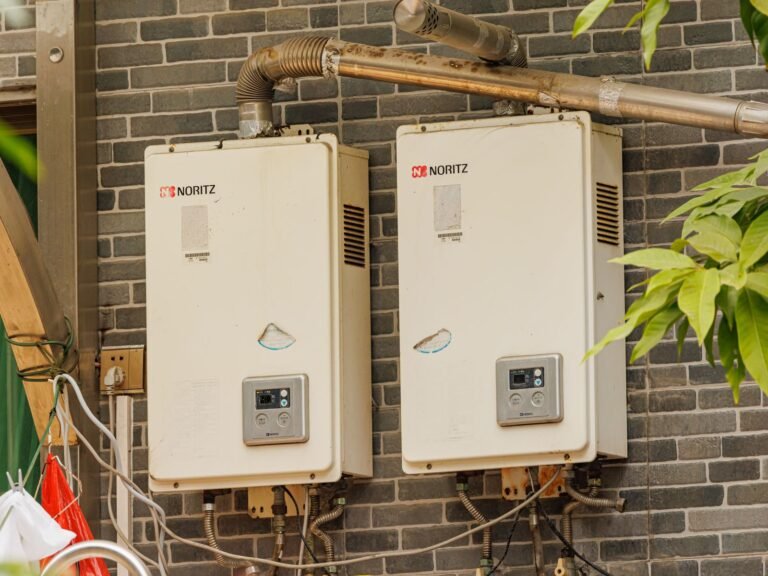
Tankless Water Heater Installation
Sized for your household, with gas line, venting and altitude handled.
Learn more
Heat Pump Water Heaters
Hybrid tanks that use far less electricity, with rebates checked first.
Learn more
Water Heater Maintenance
Flushing, anode rods and relief valve checks that extend tank life.
Learn morePhoto credits (Wikimedia Commons): Tankless Water Heater Installation: Dinkun Chen, CC BY-SA 4.0; Heat Pump Water Heaters: Kskhh, CC BY-SA 4.0.
Water heater trouble?
Call for a diagnosis and a written quote.
Call for a written quote on water heater installation in Fort Collins, Loveland or anywhere in Larimer County.

Water heater replacement, repair and tankless installation for Fort Collins, Loveland and Larimer County. Written, itemized quotes and licensed plumbers.
Call (970) 305-5633