
Gas vs Electric Water Heater: Which Is Right for Your Fort Collins Home?
Gas vs electric water heater: cost, running cost, recovery, lifespan, venting, heat pump models and Colorado's 2026 rules.
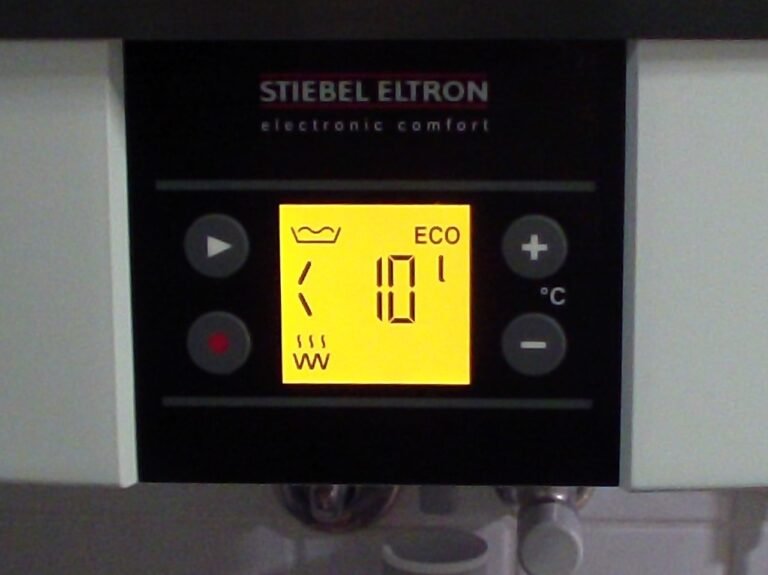
Photo: Pittigrilli, CC BY-SA 4.0, via Wikimedia Commons
A gas water heater heats water about twice as fast as a standard electric tank, so it keeps up better with back-to-back showers, while an electric tank needs no gas line or venting and burns nothing in your home. Which costs less to run depends on your gas and electric rates, and a heat pump water heater, the efficient electric option, uses about 70% less electricity than a standard electric tank, according to ENERGY STAR. Fort Collins Water Heater Pros installs gas, propane, electric and heat pump water heaters in Fort Collins, Loveland and across Larimer County.
Call (970) 305-5633 for a written quote on a gas, electric or heat pump water heater, including a fuel switch.
Call nowGas vs electric water heater at a glance
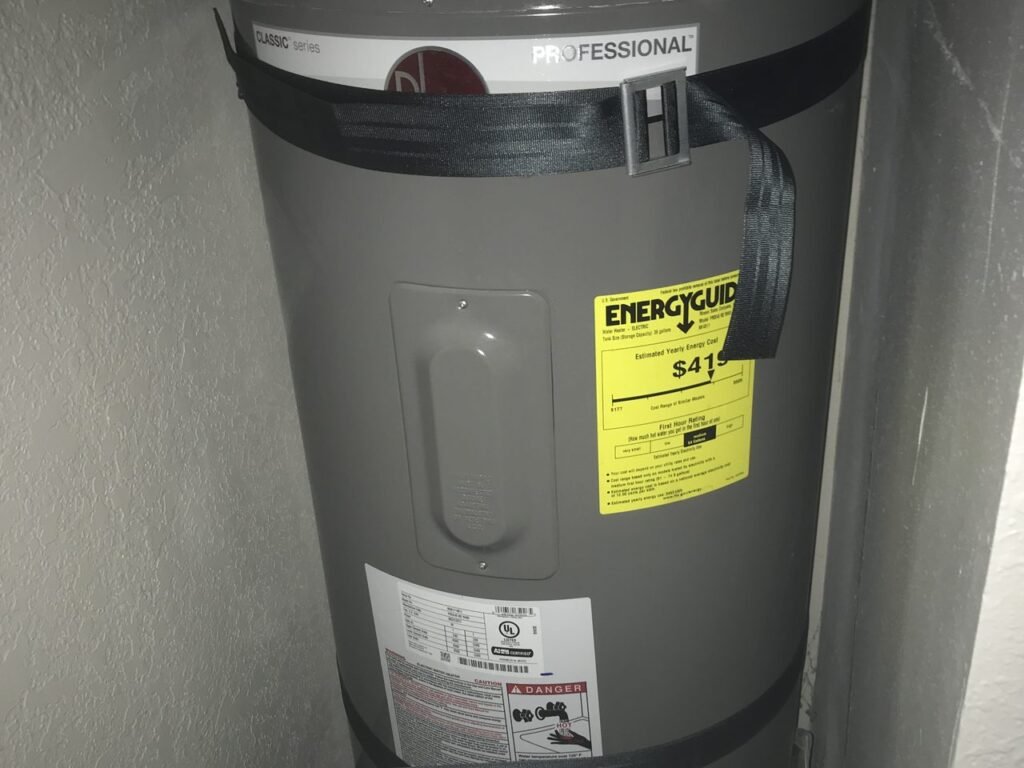
Gas wins on recovery speed, electric on simplicity and a heat pump on efficiency. Costs are replacement costs by type from one source, Angi’s cost guide updated July 20, 2026.
| Gas tank | Electric tank | Heat pump (electric) | |
|---|---|---|---|
| Replacement cost (Angi) | $700 to $2,700 | $600 to $3,500 | $1,200 to $3,500 |
| Efficiency (UEF) | Federal minimum about 0.56 to 0.63 for 50 gallons; ENERGY STAR 0.81 to 0.86 | Federal minimum about 0.92 to 0.93 for 50 gallons | ENERGY STAR 3.30, or 2.20 for 120-volt plug-in models |
| Recovery at a 90°F rise | About 40 gallons an hour at 40,000 Btu/h | About 21 gallons an hour at 4,500 watts | Switches to electric elements at high demand |
| Lifespan | Often 8 to 12 years (Angi) | May last 10 to 15 years (Angi) | 13 years assumed in ENERGY STAR’s savings math |
| Venting | Must vent to the outdoors | None | None; needs a condensate drain |
| Power | None for a standing-pilot model; power-vent models need an outlet | A dedicated 240-volt circuit on most models | Some models plug into a 120-volt outlet |
| Colorado 2026 rules | New units must meet the low-NOx limit or be ENERGY STAR certified; propane exempt until 2031 | New 40- to 120-gallon tanks need an AHRI 1430 port | Outside the NOx rule |
Upfront cost: gas vs electric water heater replacement cost
For a like-for-like swap the price ranges overlap: Angi puts gas water heaters at $700 to $2,700, electric at $600 to $3,500, propane at $700 to $2,500 and hybrid heat pump models at $1,200 to $3,500. What swings the price is the installation.
Venting can add cost: Angi says a power-vent gas unit runs $300 to $600 more, plus $300 to $500 for its electrical work. A fuel switch adds the most, as the switching section below shows.
Which is cheaper to run, gas or electric?
It depends on how much hot water you use, how efficiently the heater turns energy into hot water (its Uniform Energy Factor, or UEF, in the table above) and what you pay for each fuel. Water heating is the second-largest energy expense in a typical home, about 18% of its energy use, according to DOE.
Gas is billed per therm and electricity per kilowatt-hour, so a higher UEF alone does not settle it. Compare the cost of the heat itself:
- Find your rates on your bills, per therm for gas and per kWh for electricity, including delivery charges.
- Convert to the same unit. A therm is 100,000 Btu and a kWh is 3,412 Btu (U.S. Energy Information Administration), so multiply your electric rate by 29.3 to get the cost of 100,000 Btu of electricity.
- Divide each cost by the heater’s UEF. The lower result costs less per gallon of hot water.
The yellow EnergyGuide label will not settle it either: its yearly cost uses a national average price and compares the heater only with models that use the same fuel.
Fort Collins, Loveland, Longmont and Estes Park run their own electric utilities, supplied by Platte River Power Authority, while Xcel Energy or Poudre Valley REA serves much of the surrounding area. Natural gas comes from Xcel Energy in Fort Collins and Longmont, Atmos Energy in Greeley and Black Hills Energy in Wellington.

Recovery: which heats water faster?
Gas. A.O. Smith’s training manual works the numbers at a 90°F rise: a 40,000 Btu/h gas tank heats about 40 gallons an hour, a 4,500-watt electric tank about 21 and a 5,500-watt tank about 25, so gas heats water about twice as fast thanks to its higher input.
That matters most for back-to-back showers, so compare first-hour ratings on the EnergyGuide labels, not just tank sizes.

Venting and safety
Gas water heaters burn fuel, so they must vent combustion gases to the outdoors and have enough combustion air: by the code’s standard method, 50 cubic feet of indoor air per 1,000 Btu/h of input. They also need a gas shutoff within 6 feet and a sediment trap, and in a garage the ignition source must sit at least 18 inches above the floor unless the heater is listed as flammable vapor ignition resistant.
Electric and heat pump models have no flame or flue; ENERGY STAR notes that switching from gas to a heat pump removes a potential source of carbon monoxide. If you ever smell gas, leave the house and call your gas utility from outside.

Heat pump water heaters: the efficient electric option
A heat pump water heater moves heat from the surrounding air into the tank instead of making heat with elements, and switches to its elements at times of high demand. ENERGY STAR estimates a certified model saves a household of four about $550 a year compared with a standard electric water heater, assuming electricity at 14.6 cents per kWh.
ENERGY STAR says it needs an interior space that stays between 40°F and 90°F year-round with about 1,000 cubic feet of air around it, it can cool that space, and its condensate needs a drain or pump. ENERGY STAR also suggests going up a tank size when replacing a gas heater. Incentives in 2026 (verify current amounts before you buy):
- Efficiency Works (Fort Collins, Loveland, Longmont and Estes Park electric customers): up to $600 when replacing an electric or propane water heater, up to $400 when replacing gas.
- Xcel Energy: a $750 standard rebate, plus a limited-time bonus. Xcel lists no rebate for gas water heaters.
- Poudre Valley REA members: $350.
- State of Colorado: a $250 tax credit claimed by a state-registered installer, at least $83 of which must come off your invoice. The federal credit ended with 2025.
Atmos Energy, by contrast, still pays rebates on high-efficiency gas water heaters in Greeley and the other Weld County towns it serves. More in are heat pump water heaters worth it and on our heat pump water heater page.
What switching from gas to electric (or back) involves
Going from gas to electric usually means a dedicated 240-volt circuit and enough panel capacity; going from electric to gas means a gas line, venting to the outdoors, combustion air and a permit.
- Gas to electric. Angi puts a new electrical line and sub-panel at $500 to $1,000, with total wiring upward of $2,300 in some cases, and the old gas line gets capped. A 120-volt plug-in heat pump model can avoid a new 240-volt circuit, and Efficiency Works offers up to $500 toward a panel upgrade to 200 amps or more done with a heat pump water heater (verify current amounts).
- Electric to gas. Angi says installing a gas line averages $260 to $820 and can run upward of $1,500 when switching from an electric water heater. Add venting, combustion air, a shutoff and sediment trap, and any carbon monoxide alarms the permit calls for, with the gas piping sized for the added load.
Either way it is not a like-for-like swap: Weld County’s express permit defines like-for-like as matching voltage, amperage, input Btu, venting method and fuel type, among other things, and Loveland requires a submittal when a gas appliance’s Btu load increases.

Colorado’s 2026 rules for gas and electric water heaters
Since January 1, 2026, Colorado has barred the sale of new natural gas water heaters that exceed its ultra-low NOx limits, 10 or 14 nanograms per joule depending on the model, unless they are ENERGY STAR certified or were already in Colorado stock. The law does not ban installing or repairing gas water heaters or require you to replace a working one. Propane models are exempt until January 1, 2031, which matters in the foothills around Livermore and Masonville, where propane is common. Our guide to Colorado’s low-NOx water heater law covers the details.
Electric and heat pump water heaters are outside the NOx rule. Instead, since January 1, 2026, new electric storage water heaters sold in Colorado, defined as 40 to 120 gallons and 12 kilowatts or less, must have a modular demand response communications port that meets the AHRI 1430 standard.
Which should you choose?
- Gas if you already have a gas line and vent, your household runs lots of hot water at once, and the cost math above favors gas at your rates.
- A standard electric tank if gas is not available or venting is impractical, and your hot water use is modest.
- A heat pump water heater if you heat with electricity now, have a basement or utility room that suits it, and want the lowest running cost on electricity.
Every installation is done by licensed plumbers under a permit, with gas units set up for our altitude, and our written quote lists the heater, venting or wiring work, permit, code upgrades and haul-away. See what we include in water heater installation in Fort Collins, or start with water heater replacement in Fort Collins if your tank is failing.
Gas vs electric water heater FAQ
Is a gas or electric water heater cheaper to run?
It depends on your rates. Convert your gas and electric prices to the same unit of heat and divide by each heater’s UEF; a heat pump model uses about 70% less electricity than a standard electric tank, according to ENERGY STAR.
Can I switch from a gas to an electric water heater?
Yes. Most electric tanks need a dedicated 240-volt circuit and enough panel capacity, the gas line is capped, and the job needs a permit; some heat pump models plug into a 120-volt outlet instead.
What does switching from electric to gas involve?
A gas line sized for the heater, venting to the outdoors, combustion air, a shutoff and sediment trap, and a permit.
Are gas water heaters banned in Colorado?
No. Since January 1, 2026, new natural gas water heaters sold in Colorado must meet the state’s low-NOx limit or be ENERGY STAR certified, unless they were already in Colorado stock, and propane models are exempt until 2031.
Does an electric water heater need 240 volts?
Most standard electric tanks do; A.O. Smith says the voltage available is usually 240 volts. Some heat pump water heaters are made to plug into a 120-volt outlet.
Keep reading
Related guides

How Long Do Water Heaters Last? Lifespan, Warning Signs and When to Replace in Fort Collins
Tanks last 10 to 15 years and tankless over 20, per DOE. Warning signs, how to read your heater’s age and when to replace it.
Read guide
Power Vent Water Heater vs Atmospheric, Direct Vent and Condensing: Venting Types and Larimer County Rules
How a power vent water heater compares with atmospheric, direct vent and condensing models, plus Larimer County vent rules. Call before you replace.
Read guide
What Size Water Heater Do I Need? A Fort Collins Sizing Guide
What size water heater do you need? Tanks by first-hour rating, tankless by flow and rise at Fort Collins altitude. Call (970) 305-5633 for help.
Read guidePhoto credits (Wikimedia Commons): How Long Do Water Heaters Last? Lifespan, Warning Signs and When to Replace in Fort Collins: Czarking0, CC0.
Water heater trouble?
Call for a diagnosis and a written quote.
Call to compare gas, electric and heat pump water heaters for your home with a written, itemized quote.

Water heater replacement, repair and tankless installation for Fort Collins, Loveland and Larimer County. Written, itemized quotes and licensed plumbers.
Call (970) 305-5633