
Are Heat Pump Water Heaters Worth It? Pros, Cons and Payback in Fort Collins
Are heat pump water heaters worth it? Honest pros and cons, a payback example with 2026 rebates and Colorado winter tips.
Yes, for most households replacing an electric tank. ENERGY STAR estimates a certified heat pump water heater saves a family of four about $550 a year over a standard electric water heater and repays its assumed $1,503 extra cost in about 2.7 years, and 2026 rebates in Fort Collins and Loveland shorten that; the case is weaker for small households, cold or cramped spaces and homes switching from gas. Fort Collins Water Heater Pros installs heat pump, tank and tankless water heaters across Larimer County, and our licensed plumbers will tell you plainly which one pays off in your home.
Call (970) 305-5633 for a written quote that prices a heat pump water heater next to a standard tank.
Call nowHeat pump water heater pros and cons

The main advantage is much lower electricity use; the drawbacks are a higher price, the space and drain it needs, a steady hum and slower recovery. Each figure below names its source.
| Pros | Cons | |
|---|---|---|
| Energy use | Two to three times as efficient as electric resistance heating (DOE) | Backup elements run during heavy use and more in cold months (ENERGY STAR) |
| Running cost | About $270 to $550 a year saved against a standard electric heater, for two to four people (ENERGY STAR) | Those estimates say nothing about savings against gas |
| Upfront cost | 2026 rebates from $350 (Poudre Valley REA) to $750 (Xcel), plus at least $83 off through Colorado’s credit | $2,500 to $3,500 (This Old House, June 2026) |
| Space | Often fits where the old heater sat (ENERGY STAR) | Needs a room roughly 40°F or warmer with several hundred cubic feet of air (ENERGY STAR); bigger than a standard tank (A.O. Smith) |
| Comfort | Helps cool and dehumidify in hot, humid weather (ENERGY STAR) | Cools the room in winter too; a fan and compressor you can hear |
| Hot water | Hybrid mode covers everyday demand (ENERGY STAR) | Heat pump recovery is slower, most of all on 120-volt models (DOE) |
| Installation | Some 120-volt plug-ins need no new wiring (A.O. Smith) | A drain or condensate pump; a dedicated circuit for 240-volt models |
Are heat pump water heaters worth it? A payback example
In the example below, a family of four replacing a failed electric tank recovers the extra cost in about a year and a half, and replacing a working tank early takes about 3 to 5 years. This is our arithmetic on published estimates, not a quote or a promise: your result depends on household size, your electric rate and how the unit runs. The inputs:
- Extra cost: ENERGY STAR assumes a certified heat pump model costs $1,503 more than a standard electric water heater.
- Installed price: This Old House’s installation cost guide (updated June 17, 2026) puts heat pump water heaters at $2,500 to $3,500.
- Savings: ENERGY STAR’s yearly estimates against a standard electric water heater, at 14.6 cents per kWh: $270 for two people, $410 for three, $550 for four.
- Rebates: a Fort Collins Utilities customer replacing an electric tank can get up to $600 from Efficiency Works, plus at least $83 off the invoice through Colorado’s tax credit, $683 in all.
Example A: your electric tank has failed. You are buying a heater either way, so only the premium counts: $1,503 minus $683 leaves $820.
Example B: your electric tank still works. Replacing it early means the whole price counts: $2,500 to $3,500 minus $683 leaves $1,817 to $2,817.
| Household | ENERGY STAR yearly savings | Example A: years to recover $820 | Example B: years to recover $1,817 to $2,817 |
|---|---|---|---|
| 2 people | $270 | About 3.0 | About 6.7 to 10.4 |
| 3 people | $410 | About 2.0 | About 4.4 to 6.9 |
| 4 people | $550 | About 1.5 | About 3.3 to 5.1 |
Without rebates, ENERGY STAR’s own payback is 2.7 years for four people and 5.5 for two, against the 13-year life it assumes. If your rate isn’t 14.6 cents per kWh, multiply ENERGY STAR’s estimated kWh savings (1,880, 2,820 and 3,760 a year for two, three and four people) by your rate. A Poudre Valley REA member would subtract $350 instead of $600, and an Xcel electric customer $750; check current amounts with your utility. The example also leaves out any wiring, condensate pump or ducting a particular home needs.
Who benefits most from a heat pump water heater
- Households replacing an electric tank. ENERGY STAR measures its savings against a standard electric water heater, electric tanks typically have a 240-volt circuit already (A.O. Smith), and A.O. Smith recommends its 240-volt models for exactly this swap.
- Bigger households. Savings grow with hot water use, from $270 a year for two people to $550 for four (ENERGY STAR).
- City electric customers in Fort Collins, Loveland, Longmont and Estes Park. Efficiency Works pays its top tier, up to $600, when the heat pump replaces an electric or propane heater.
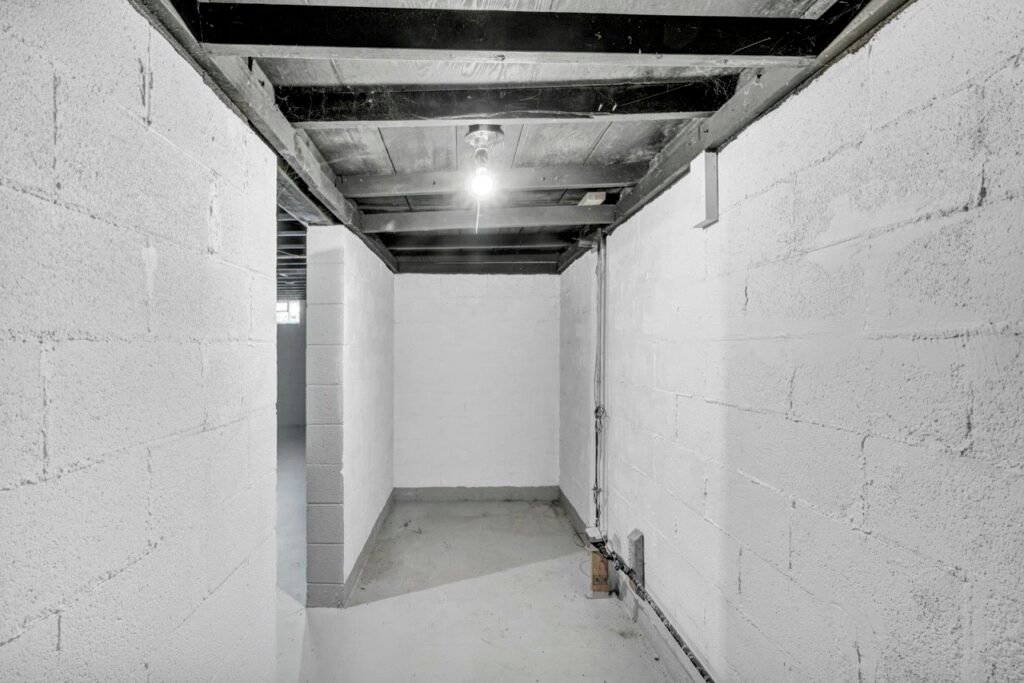
- Homes with an open basement or utility room near a drain, where the unit has plenty of air to draw on.
Who benefits less
- Homes replacing a gas water heater. ENERGY STAR’s savings figures compare heat pump models with electric water heaters, not gas, so we won’t put a number on savings against gas. Efficiency Works pays up to $400 instead of $600, and a new 240-volt circuit adds cost: Angi’s July 2026 guide says wiring for a fuel switch can run upward of $2,300, though a 120-volt plug-in may avoid it.
- One- and two-person households, where ENERGY STAR’s estimate drops to $270 a year.
- Homes without a suitable spot, such as a tight closet or a garage that falls below roughly 40°F in winter.
- Households with heavy back-to-back demand and no room for a bigger tank.
If gas is staying, our tankless water heater pros and cons guide compares the gas options.
Heat pump water heaters in Colorado winters and basements
The room’s temperature matters more than the weather outside, because the unit draws heat from the air around it. A basement that stays roughly 40°F or warmer works year-round, and Rheem rates its ProTerra heat pump to operate in air from 37°F to 145°F.
Winter still costs some efficiency. ENERGY STAR says colder incoming water can push the unit into backup electric mode for a while in colder months, raising energy use, and DOE’s installer training notes that cold inlet water and cooler room air slow recovery. Sizing for your busiest hour keeps the heat pump doing most of the work.
The unit also cools the basement as it runs. Most Larimer County homes heat with utility gas, 69% in the Census Bureau’s 2020-2024 survey estimates, so a heat pump water heater may share a room with a gas furnace. DOE warns that can upset the furnace’s draft, as can leaving the furnace alone on a vent it once shared with a gas water heater. In unheated spaces, condensate lines also need protection from freezing.

Disadvantages of a heat pump water heater
- Noise. The fan and compressor make a sound other water heaters don’t; A.O. Smith rates its 120-volt Voltex at 45 dBA and tells installers to consider the location.
- Size. A.O. Smith puts heat pump models 2 to 3 inches wider and 3 to 4 inches taller than a standard electric tank, and 4 to 6 inches wider and 3 to 8 inches taller than a gas one.
- Slower recovery. DOE says resistance elements recover faster than the heat pump, which is why they switch on for heavy demand; a 120-volt unit with small or no elements can run out if undersized, and a mixing valve helps.
- Maintenance. Rheem’s ProTerra has a washable air filter on top, and DOE says the condensate drain should be easy to reach for clearing blockages.
- An unproven lifespan. ENERGY STAR and DOE’s Federal Energy Management Program both use 13 years in their estimates, an assumption rather than a measured life; DOE puts storage tanks in general at 10 to 15 years.
How to get more from a heat pump water heater
- Run it in hybrid or efficiency mode. ENERGY STAR says efficiency mode, heat pump only, saves the most and electric mode is the least efficient; use vacation mode when you travel, on models that have it.
- Size for your busiest hour, so the elements rarely need to help (DOE).
- Rethink a recirculation pump. DOE’s installer training says a continuously running loop can keep the heat pump from working properly and wastes energy, and many efficiency programs require push-button or sensor control.
- Xcel electric customers can earn a $100 enrollment credit and $25 a year in Xcel’s smart heat pump water heater program, which needs a mixing valve and a communications module from a participating installer.
Do heat pump water heaters need 240 volts?
Not all of them. The standard hybrids Rheem and A.O. Smith build for replacing electric tanks need a dedicated 240-volt circuit (A.O. Smith specifies 30 amps), while 120-volt plug-ins run from an ordinary outlet, and A.O. Smith’s can share a 15-amp circuit. ENERGY STAR sets a lower bar for plug-ins, a UEF of 2.20 against 3.30, and Xcel’s 2026 rebate summary requires a 3.3 UEF, so check a plug-in’s rating before counting on that rebate. Our heat pump water heater page compares the two in detail and explains how we install them.

Rebates make the biggest difference
Rebates do the most for electric-tank replacements in city-electric homes. Our guide to heat pump water heater rebates lists each town’s utilities, the 2026 amounts and deadlines, and how Colorado’s $83 invoice discount works. The IRS says the federal 25C credit no longer applies to 2026 installs. If a heat pump doesn’t fit your home, our page on water heater replacement in Fort Collins covers standard tanks.
Heat pump water heater FAQ
How long does a heat pump water heater take to pay for itself?
Before rebates, ENERGY STAR estimates about 2.7 years for a family of four and 5.5 years for two, compared with a standard electric heater. With Efficiency Works’ $600 and the $83 state discount, our arithmetic gives about 1.5 to 3 years when a failed electric tank needs replacing anyway.
Is a heat pump water heater worth it if I have gas?
It can be, but we can’t put a number on it, because ENERGY STAR’s savings estimates compare heat pump models with electric heaters, not gas. Weigh the wiring, Efficiency Works’ lower $400 tier for gas replacements and the space the unit needs.
Is a heat pump water heater worth it for a small household?
It pays back more slowly. ENERGY STAR estimates $270 a year in savings for two people, a 5.5-year payback before rebates; with Efficiency Works’ $600 and the $83 state discount, our arithmetic gives about 3 years when a failed electric tank needs replacing anyway.
How long do heat pump water heaters last?
There is no measured figure. ENERGY STAR and DOE’s Federal Energy Management Program assume 13 years in their savings estimates, while DOE puts storage tanks in general at 10 to 15 years.
What are the disadvantages of a heat pump water heater?
A higher upfront price, the need for warmth, air and a drain, a steady hum, slower recovery and a cooler room. Most can be planned around; a cold or cramped space can’t.
Keep reading
Related guides

How to Descale a Tankless Water Heater: Steps and How Often
How to descale a tankless water heater with a pump and vinegar, per Rinnai, Navien and Noritz manuals, and how often on Fort Collins’ soft water.
Read guide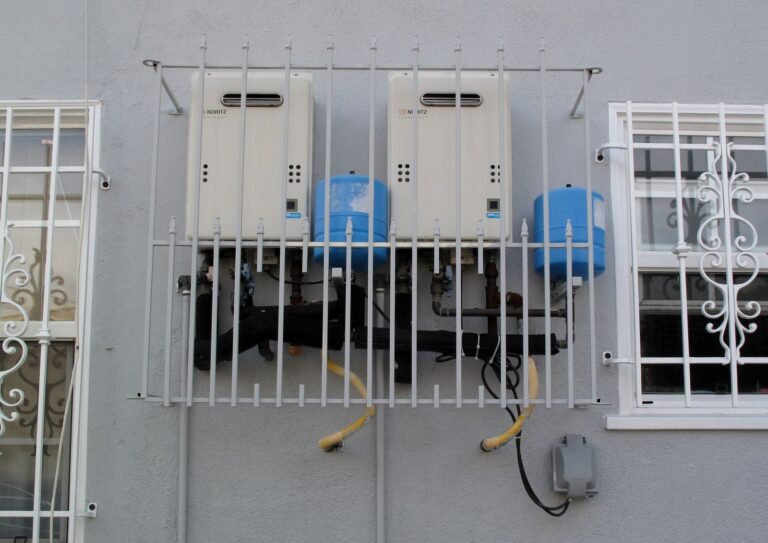
Tankless Water Heater Pros and Cons: Tank vs Tankless in Fort Collins
Tankless water heater pros and cons vs a tank: cost, lifespan, flow limits, altitude derating and when a heat pump fits better.
Read guide
Tankless Water Heater Error Codes: What Rinnai Code 11 and 12, Navien E003 and Noritz 11 Mean
Rinnai code 11 means no ignition and code 12 a lost flame. What Rinnai, Navien and Noritz codes mean, safe checks and when to call a plumber.
Read guidePhoto credits (Wikimedia Commons): Tankless Water Heater Pros and Cons: Tank vs Tankless in Fort Collins: Downtowngal, CC BY-SA 4.0.
Water heater trouble?
Call for a diagnosis and a written quote.
Call to have our licensed plumbers check your space and price a heat pump water heater against a standard tank.

Water heater replacement, repair and tankless installation for Fort Collins, Loveland and Larimer County. Written, itemized quotes and licensed plumbers.
Call (970) 305-5633