
Tankless Water Heater Repair in Fort Collins and Loveland
Tankless error codes, lukewarm water, ignition faults and scale buildup fixed, with descaling on the maker's schedule.
- Honest repair-or-replace advice
- Written, itemized quotes
- Licensed and insured
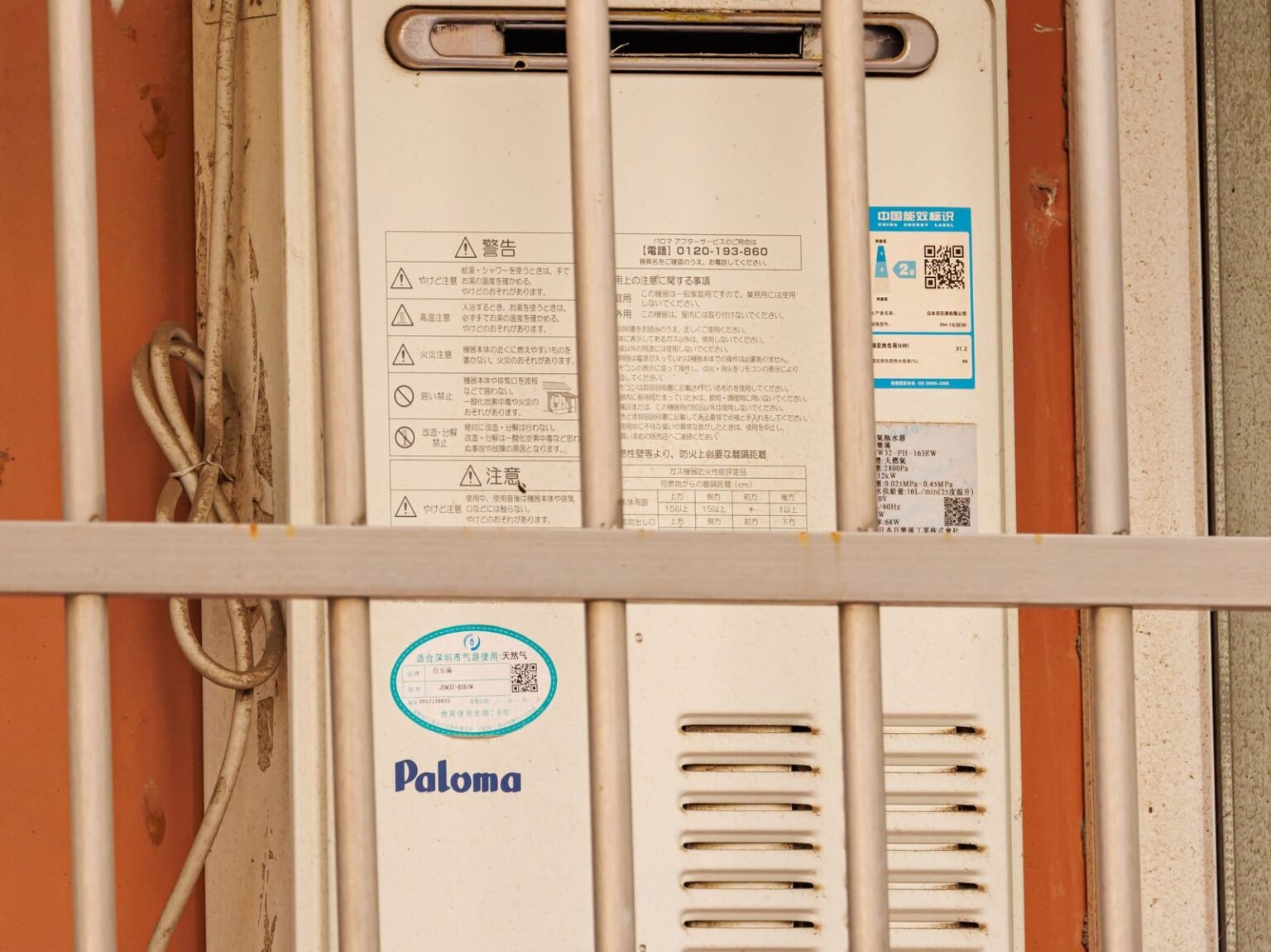
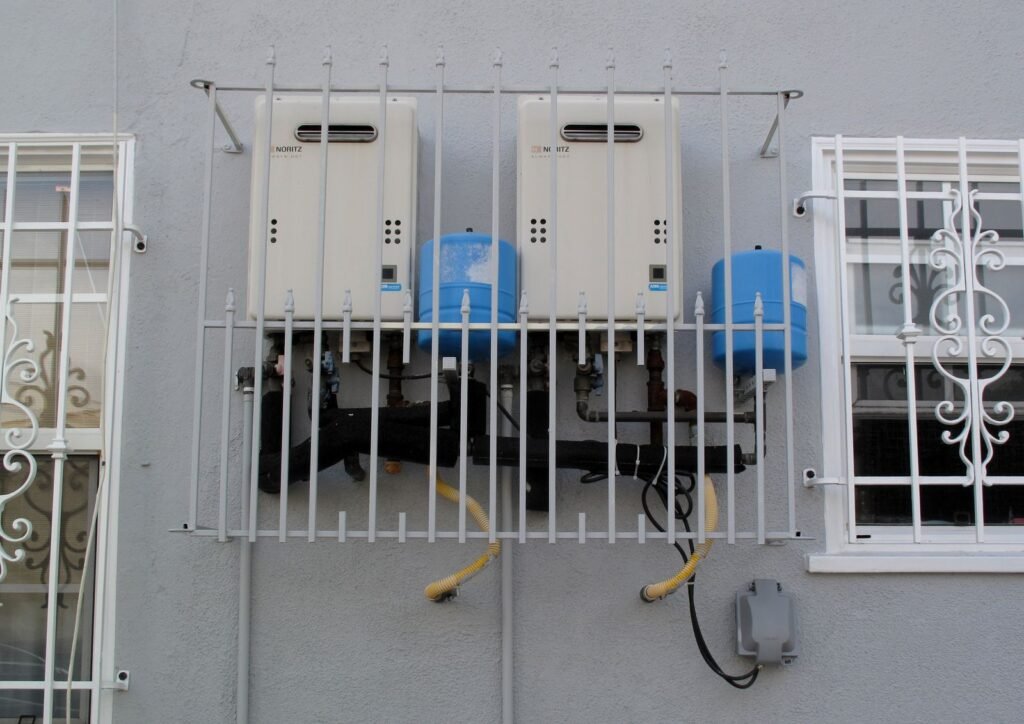
Photo: Dinkun Chen, CC BY-SA 4.0, via Wikimedia Commons
Fort Collins Water Heater Pros repairs and maintains tankless water heaters in Fort Collins, Loveland and across Larimer County. Our licensed plumbers trace error codes, ignition failures, low-flow shutoffs, venting faults and freeze damage to the part that failed, then service it on the manufacturer’s schedule. Local water is soft, so scale is a slower threat here than most tankless advice suggests, and you get a written, itemized quote before any work starts.
Call (970) 305-5633 with your heater’s brand, model and any code on the display, and we’ll book a diagnosis.
Call nowChoose your area
Permits, water and energy providers differ by town. Pick yours:
Tankless water heater problems: symptom, likely cause and what we do
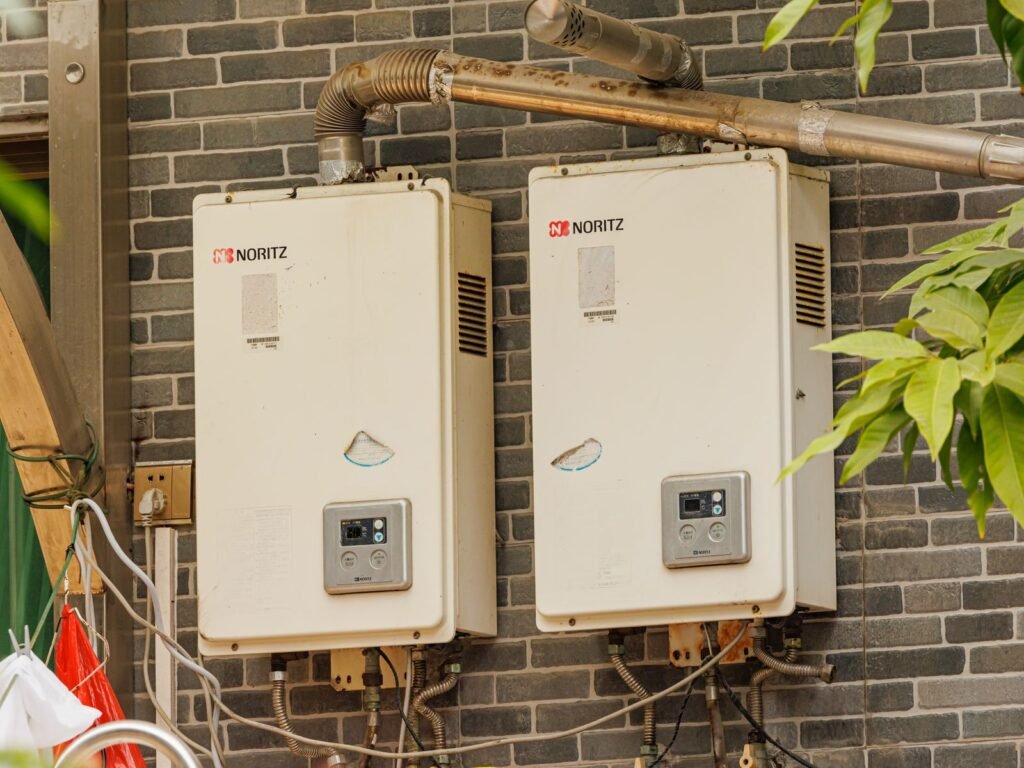
Causes come from Rinnai and Navien manuals and the U.S. Department of Energy (DOE).
| What you notice | Likely causes | What we do |
|---|---|---|
| No hot water; burner won’t light | Closed gas valve, empty propane tank, low gas pressure, air in a new line, igniter or flame rod fault, wrong altitude setting | Measure gas pressure, test the igniter and flame rod, check the settings |
| A brief cold burst between hot | The cold-water sandwich: a required ignition delay after a tap goes off and back on | Confirm it is normal; a buffer tank or recirculation reduces it |
| Temperature swings in a steady shower | Flow near the heater’s minimum, a clogged inlet filter screen, crossed hot and cold piping | Measure flow, clean the screen, trace any crossover |
| Shuts off when a tap is turned down | Flow below the minimum activation rate, a restricted screen, a faulty flow sensor | Clean the screen, test the flow sensor |
| Code on the display | The heater’s own diagnosis of a gas, air, water or sensor fault | Read the code history, test the part it points to |
| New fan noise or rattle | Debris in the combustion fan, a 1/2-inch corrugated gas connector | Clean the fan, correct the connector |
| Air or vent codes, exhaust smell | Blocked terminal, full condensate trap, frozen condensate line, vent too long or of the wrong material | Clear the terminal and drain, check the vent run |
| No flow or leaks after a cold snap | Power or gas lost below freezing, wind on an outdoor unit, bare pipes | Thaw it safely, check for leaks, replace burst parts |
| Overheat or scale codes, weaker flow | Scale in the heat exchanger, a clogged screen, a high temperature setting | Flush per the manual, clean the screen, lower the setting |
If you smell gas, leave the house and call your gas utility from outside. If a carbon monoxide alarm sounds, get everyone outside and call 911. Our guide to tankless water heater error codes explains each brand’s codes and the safe checks to make first.
No ignition or flame failure: igniter, flame rod, gas and altitude
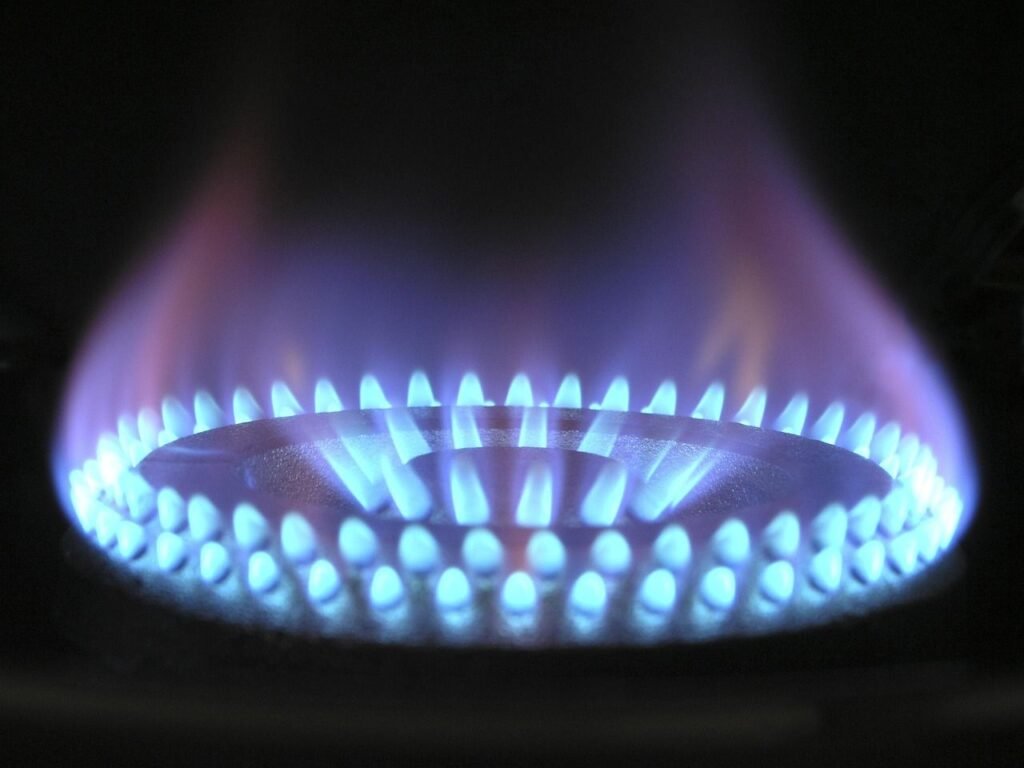
When a heater senses flow but won’t light, or lights and drops out, the cause lies in the gas supply, ignition parts or setup. Rinnai’s checklist for its RU models starts with gas: valves open, gas in a propane tank (common in foothill homes around Livermore and Masonville), the right gas type, no air in a new line, and inlet pressure of 3.5 to 10.5 inches of water column on natural gas. Then come the igniter, which sparks the burner, and the flame rod, which proves a flame is present.
Rinnai’s RU models and Navien’s NPE-2 ship set for 0 to 2,000 feet, while Fort Collins sits at 5,004 feet and Loveland at 4,986 (USGS), so we confirm the altitude setting was changed at installation. Navien natural gas units also need a high-altitude kit at 5,400 feet or higher, as in Livermore and Estes Park.
Low flow shutoff and temperature swings: flow sensor and inlet filter screen
A tankless heater fires only when its flow sensor detects water moving through it. DOE says units typically need 0.4 to 0.9 gallons per minute (gpm) to start; Rinnai’s RU models need 0.4. Rinnai says water that alternates between hot and cold can mean flow at or near that minimum, so open the tap further first.
The next suspect is the inlet filter screen, a mesh strainer where cold water enters. Navien says it must be cleaned periodically to keep water flowing, and both brands list it for no-heat complaints. We clean it, test the flow sensor and check for crossed hot and cold piping.
Venting and condensate problems on condensing tankless units
Condensing units pull enough heat from the exhaust to condense acidic water (pH 3 to 5, per Navien) that must drain freely. Rinnai’s code 10 covers a blocked intake or exhaust or a full condensate trap, and Navien warns that a frozen or blocked condensate line can overflow and cause water damage.
We clear snow and ice from the terminals (Larimer County requires them at least 12 inches above the expected snow level), check vent length and material, and pH-test the condensate neutralizer, which Navien recommends yearly. Loveland requires cellular-core direct-vent exhaust to be replaced, Windsor bans cellular-core PVC water heater vents, and Colorado requires new plastic exhaust pipe to pass a 5 psi air test at inspection.

Freeze protection for garage and outdoor tankless units
Tankless heaters protect themselves from freezing only while they have power. Rinnai says its indoor units won’t freeze at outdoor temperatures down to -22°F, or -4°F for outdoor units, when plugged in and sheltered from wind, and that protection never covers pipes and valves outside the cabinet.
If power or gas goes out in freezing weather, Rinnai says to drain the heater, including the condensate trap and relief valve, and recommends a drain-down kit that empties the unit automatically when power is lost. Navien says not to unplug its NPE-2 except for maintenance, to drain it before an extended outage, and not to install it outdoors where freezing is common. For garage units we insulate exposed pipes and check the drain valves.
Tankless water heater maintenance on soft water: what the manuals require
Local water is soft, so scale builds slowly here, but your manual still sets the schedule. Every local supply that publishes a hardness figure measures 14 to 35 mg/L, from Estes Park’s 14 to East Larimer County Water District’s roughly 35, with Longmont at about 22 and Loveland at 24. Fort Collins Utilities publishes no number but calls its water naturally soft.
That is far below Rinnai’s 200 mg/L limit, and Navien’s NPE-2 manual lists no treatment and no set flushing interval for water up to 60 mg/L. Rinnai still requires a yearly inspection by a licensed professional, offers a flush reminder of six months to two years, and notes that high temperature settings speed scale.
Keep the isolation valves, which Rinnai strongly recommends for flushing; we can add them if yours has none. Private wells, common around LaPorte, Bellvue and Masonville, need a water test first. Our guide to how to descale a tankless water heater has the steps, and our water heater maintenance service covers tank heaters.
Tankless warranty requirements: what Rinnai and Navien exclude
Rinnai’s RU warranty treats scale build-up, freeze damage and vent blockage as improper maintenance and excludes any damage caused by poor water quality. Navien’s NPE-2 warranty excludes hard water deposits and lime or mineral build-up, is void without regular maintenance, and routes claims through the original installer. Rinnai also requires genuine Rinnai parts for warranty repairs. Keep receipts and service records.

Rinnai, Navien, Noritz and Rheem tankless repair
We work on the common brands, including Rinnai, Navien, Noritz, Rheem and Takagi, on natural gas or propane.
Should you repair or replace a tankless water heater?
Repair a unit whose heat exchanger is sound and whose fault is a part: an igniter, flame rod, flow sensor, fan or control board. Replace it when the heat exchanger leaks or has been damaged by scale or freezing, or when an older unit keeps failing; DOE says tankless heaters can last more than 20 years. Colorado’s 2026 NOx rule covers new gas water heaters offered for sale; it does not require replacing a working heater and does not mention repairs.
If replacement wins, see tankless water heater installation, or water heater replacement in Fort Collins if you’d rather go back to a tank.
What tankless repair and maintenance cost
Angi’s tankless water heater cost guide (updated May 2, 2025) puts the average tankless repair at $600, with larger repairs up to $1,300. Angi’s flush cost guide (updated December 23, 2025) lists $150-$250 to flush a tankless unit, averaging $200. These are national figures, not local quotes; our water heater replacement cost guide covers new units.

What happens when you call
- Call (970) 305-5633. Tell us the brand, model, fuel, any code and where the heater is installed.
- Diagnosis. We read the stored code history (Rinnai keeps the last nine codes, Navien’s NPE-2 the last 10), measure gas pressure and flow, and check the inlet screen, vent, condensate drain and altitude setting.
- A written, itemized quote before any work starts: what failed and why, the part, the labor and whether a warranty may cover it.
- The repair, with parts matched to your model.
- Testing. We run the heater at more than one fixture, check gas connections for leaks and reset any service reminder.
Every job is done by licensed plumbers covered by liability insurance. For tank heaters, see our water heater repair page.
Tankless water heater repair FAQ
Why is my tankless water heater not heating?
Most often it’s the gas supply (a closed valve or empty propane tank), an ignition or flame-sensing fault, or too little flow through a clogged inlet screen. The code on the display narrows it down.
Why does my tankless water heater go cold for a few seconds?
That is the cold-water sandwich, caused by the ignition delay safety standards require when a tap goes off and back on. DOE calls it minor and uncommon; a buffer tank reduces it, and Navien says recirculation mode on its NPE-A2 models eliminates it.
Why does my tankless water heater shut off when I turn the faucet down?
The flow fell below the heater’s minimum, 0.4 gpm on Rinnai’s RU models. If opening the tap further doesn’t help, the inlet screen or flow sensor needs attention.
How often does a tankless water heater need maintenance in Fort Collins?
Rinnai requires a yearly inspection by a licensed professional. Flushing follows your manual and water: at 14 to 35 mg/L, Navien’s NPE-2 table sets no interval, and Rinnai’s reminder runs up to two years.
Do I need a water softener for a tankless water heater in Loveland or Fort Collins?
Not on city water: Loveland says its customers don’t need one, and Longmont’s report doesn’t recommend one. On a private well, test first; Navien requires a softener or its PeakFlow system above 200 mg/L.
Does the warranty cover a frozen or scaled-up tankless water heater?
Usually not. Rinnai and Navien both exclude freeze damage and scale or hard water damage, so keep the unit powered in winter and flush it as the manual directs.
How much does tankless water heater repair cost?
Angi’s guide (updated May 2, 2025) puts the national average at $600, with larger repairs up to $1,300; your written quote gives the real price first.
Related services
Tankless Water Heater Installation
Sized for your household, with gas line, venting and altitude handled.
Learn more
Water Heater Maintenance
Flushing, anode rods and relief valve checks that extend tank life.
Learn more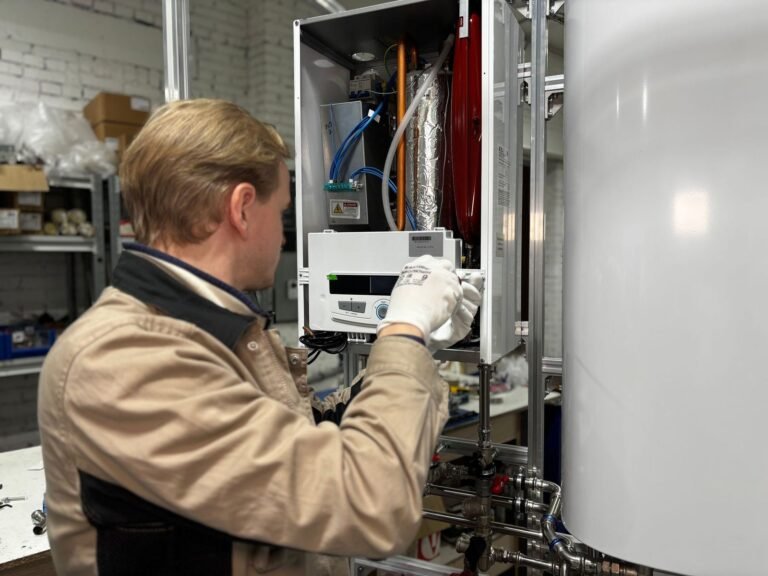
Water Heater Repair
No hot water, leaks, pilot and burner problems diagnosed and fixed.
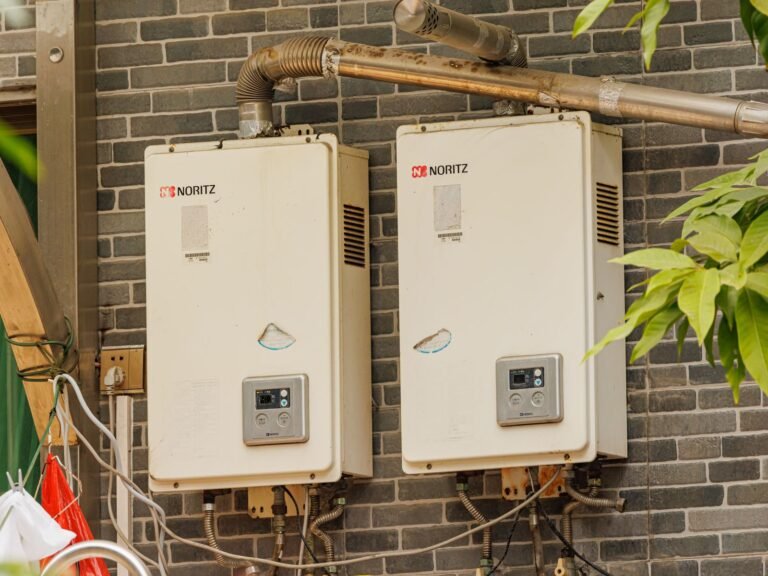
Learn morePhoto credits (Wikimedia Commons): Tankless Water Heater Installation: Dinkun Chen, CC BY-SA 4.0.
Water heater trouble?
Call for a diagnosis and a written quote.
Call for tankless water heater repair and maintenance in Fort Collins, Loveland or anywhere in Larimer County.

Water heater replacement, repair and tankless installation for Fort Collins, Loveland and Larimer County. Written, itemized quotes and licensed plumbers.
Call (970) 305-5633