
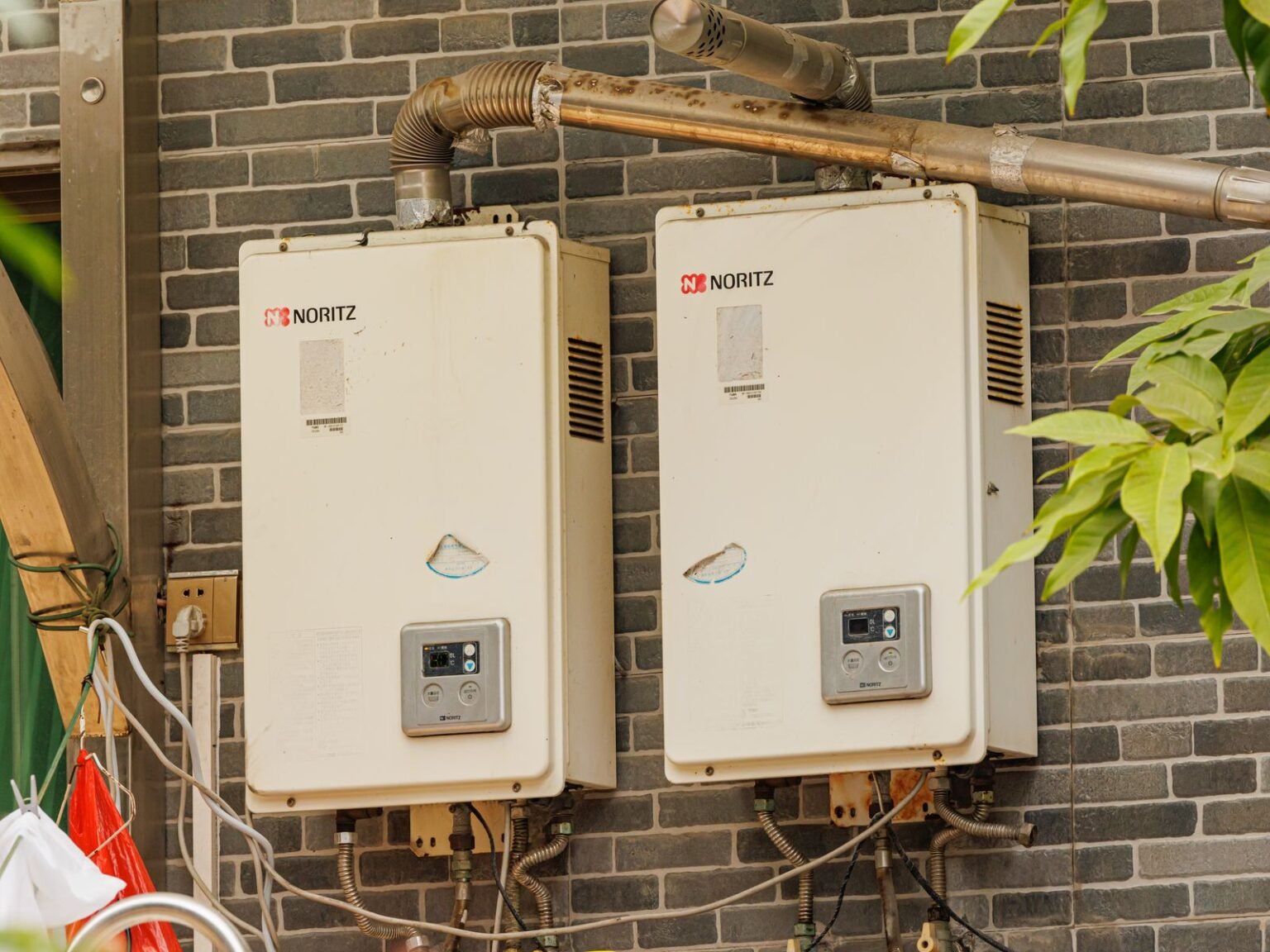
Tankless Water Heater Installation in Fort Collins and Loveland
Tankless water heaters sized for your household, with the gas line, venting and high-altitude settings handled.
- Honest repair-or-replace advice
- Written, itemized quotes
- Licensed and insured
Photo: Dinkun Chen, CC BY-SA 4.0, via Wikimedia Commons
Fort Collins Water Heater Pros installs gas, propane and electric tankless water heaters in Fort Collins, Loveland and across Larimer County. Our licensed plumbers size each unit by flow and temperature rise, set it up for our altitude, check the gas line, venting and power, and pull the permit. At about 5,000 feet, one 199,000 Btu/h Rinnai model is derated to 170,000 Btu/h, so we size from the derated figure.
Call (970) 305-5633 for a written, itemized tankless quote sized for your home and elevation.
Call nowChoose your area
Permits, water and energy providers differ by town. Pick yours:
Is a tankless water heater right for your home?
A tankless water heater suits a home whose peak hot water use fits one unit’s flow and whose gas line, venting and power can support it at a sensible cost. Where several showers and appliances often run at once, or the upgrades would be major, a tank or a heat pump may serve you better.
The U.S. Department of Energy (DOE) says tankless units can be 24% to 34% more efficient than storage tanks in homes using 41 gallons of hot water a day or less, and 8% to 14% in homes using about 86. They cost more up front but typically last longer.
- Stay with a tank if a large household often runs showers, a tub and laundry together; DOE notes even the largest gas model can fall short then. See water heater replacement in Fort Collins.
- Consider a heat pump in an all-electric home. ENERGY STAR says a certified heat pump water heater can save a family of four about $550 a year over a standard electric tank.
Our tankless water heater pros and cons guide compares all three.

How we size a tankless water heater: flow and temperature rise
Add up the gallons per minute (gpm) of the fixtures you run at once, subtract your coldest incoming water temperature from your set point, and choose a model whose flow chart covers that flow at that rise at your altitude setting.
DOE says tankless units typically deliver 2 to 5 gpm. The EPA puts standard showerheads at 2.5 gpm and WaterSense models at 2.0 gpm or less, so two low-flow showers need about 4 gpm. We size for winter, when incoming water is coldest, and for altitude: at a 70°F rise, a unit derated to 170,000 Btu/h can heat at most about 4.9 gpm. See what size water heater do I need for the math.

How altitude changes a gas tankless water heater
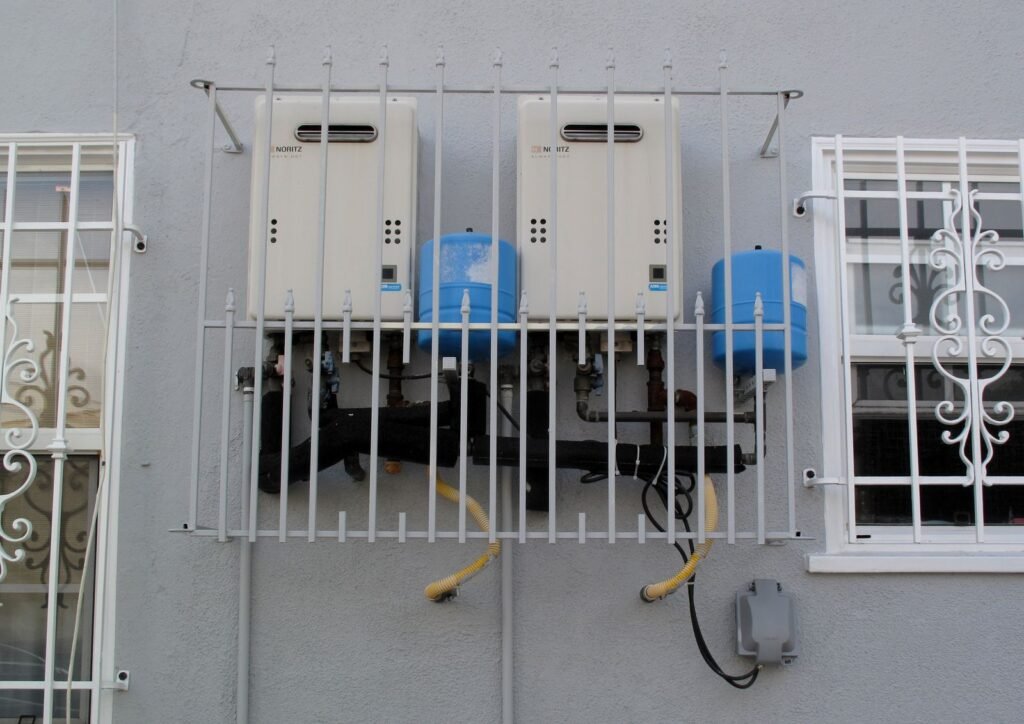
The fuel gas code requires gas flow to be adjusted above 2,000 feet (IFGC 402.2), and every town we serve is above 4,600 feet (USGS).
Rinnai’s V-series units set altitude on DIP switches in bands, and Rinnai’s venting instructions show one 199,000 Btu/h natural gas model derating automatically:
| Rinnai band | Input of the 199,000 Btu/h model | Drop | Towns at their USGS points |
|---|---|---|---|
| 2,001-5,200 ft | 170,000 Btu/h | about 15% | Fort Collins (5,004 ft), Loveland (4,986 ft), Windsor, Greeley, Longmont, Berthoud, Timnath, Johnstown, Severance, Milliken, LaPorte, Bellvue |
| 5,201-7,700 ft | 153,000 Btu/h | about 23% | Wellington (5,207 ft), Masonville, Livermore, Estes Park (7,530 ft) |
| 7,701-10,200 ft | 139,000 Btu/h | about 30% | Homes above 7,700 ft |
Navien sets the NPE-2’s altitude in a menu, and its natural gas units need a high-altitude conversion kit (a gas orifice packed inside the case) at 5,400 feet or higher: Livermore and Estes Park, not Fort Collins or Loveland. Rinnai warns that wrong DIP switch settings can cause unsafe operation, damage and a voided warranty.
Settings follow your home’s own elevation, so we check homes near a band edge, such as Wellington, Masonville and Estes Park, on site.
Gas line, venting and power for a tankless water heater
Gas line and meter capacity
A whole-house gas tankless unit can burn several times the gas of a tank: one Bradford White spec sheet rates its 50-gallon atmospheric tanks at 34,000 to 50,000 Btu/h, against 199,000 for the Rinnai. The fuel gas code sizes piping for the sum of every connected appliance’s maximum input (IFGC 402.2), and Navien’s manual says the gas meter’s capacity must cover that total.
This Old House’s tankless cost guide (updated June 12, 2026) says some older homes need the line upsized from 1/2 inch to 3/4 inch, adding $400-$800. A meter upgrade typically goes through your gas utility. Loveland’s water heater permit asks for the old and new Btu input.
Condensing vs non-condensing tankless: venting and condensate
A condensing unit adds a secondary heat exchanger that pulls extra heat from the exhaust until its moisture condenses; ENERGY STAR says that cuts energy use 9% against a conventional gas tankless unit.
| Condensing | Non-condensing | |
|---|---|---|
| Heat exchangers | Primary and secondary | Primary only |
| Exhaust vent | PVC, CPVC or polypropylene, per the manual | Hotter exhaust; the vent its listing names |
| Condensate | Acidic; drains, sometimes through a neutralizer | Designed not to condense |
| ENERGY STAR | Can qualify (UEF 0.95 or higher) | Not certified |
Colorado’s fuel gas code requires new plastic exhaust pipe to pass a 5 psi air test at inspection, before it is connected. Loveland requires an exhaust test certificate and bans cellular-core pipe on direct-vent exhaust, even existing pipe; Windsor bans cellular-core PVC water heater vents. Vent terminals must sit at least 22 inches above grade in Fort Collins and Larimer County, and 12 inches above the expected snow level in Larimer County.
Navien puts its NPE-2’s condensate at pH 3 to 5 and lets it run to a drain directly or through a neutralizer. If your old tank shared a vent with a furnace, we confirm the furnace still vents properly alone. See water heater venting types.
Electrical needs
Many gas tankless units need only a 120-volt outlet; Navien’s NPE-2 plugs in and draws 2 to 4 amps. Electric whole-house units are a bigger job: This Old House’s June 2026 guide says most need 120-160 amps of dedicated service and multiple 240-volt circuits, and puts a full panel upgrade at $1,000-$2,000.
Whole-house vs point-of-use tankless water heaters
A whole-house unit serves every fixture from one spot. A point-of-use unit is a smaller heater, often electric, near one fixture or area; DOE lists remote bathrooms, hot tubs and dishwasher or clothes washer boosters. DOE also suggests two or more units where simultaneous uses outrun one, though they cost more.
Tankless water heater installation cost and lifespan
This Old House’s tankless cost guide (updated June 12, 2026) puts installation at $1,200-$3,500, averaging $2,800 with equipment and labor, and $1,650-$3,500 for natural gas units, plus $400-$800 for venting through a wall or roof.
Angi’s replacement cost guide (updated July 20, 2026) lists tankless replacement at $1,400-$3,900, and $150-$2,500 in labor to convert a tank system to tankless. These are national figures, not Fort Collins quotes; our water heater replacement cost guide explains what drives the price.
DOE says most storage water heaters last 10-15 years, while tankless water heaters can last more than 20. ENERGY STAR requires a Uniform Energy Factor (UEF) of at least 0.95 for gas tankless models; the federal minimum for most is 0.81.
If Atmos Energy supplies your gas, as it does in Greeley, its 2026 Colorado rebate pays 80% of the cost, up to $800, for a gas tankless unit rated 0.95 UEF or higher (apply within 60 days; check the current amount with Atmos).

Converting from a tank to tankless: what happens when you call
- Call (970) 305-5633. Tell us your fuel, heater size and age, and number of bathrooms.
- Sizing visit. We check your fixtures, elevation and gas piping from the meter, and plan the vent, drain and power.
- Written quote and permit. Every jurisdiction we serve requires a permit and inspection; Fort Collins lists $65 per water heater plus sales tax on the project valuation.
- Old tank out. Gas or power off, water off, the tank drained (its water can scald) and hauled away.
- Mount and pipe. Isolation valves for descaling, the relief valve the manual specifies (a 3/4-inch, 150 psi pressure-only valve for Navien), and a gas shutoff within 6 feet with a sediment trap.
- Gas, vent and drain. The gas line upsized if needed and leak-tested, new plastic exhaust pressure-tested, and the condensate line run to a drain.
- Start-up and walkthrough. We set the altitude, check gas pressure, set the temperature with you and show you the inlet water filter to clean periodically; then the building department inspects.
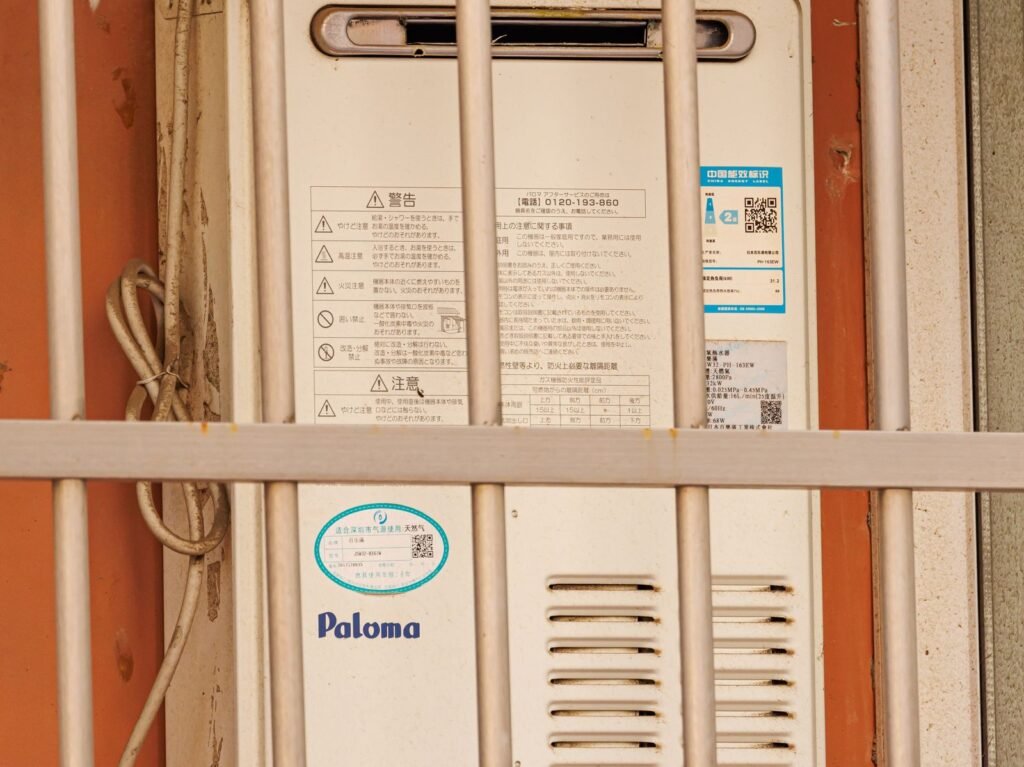
What a complete written tankless quote includes
Every quote we write spells out:
- Make and model, Btu/h input, UEF, and gpm at your winter rise and altitude
- Condensing or non-condensing, with vent material, route and termination
- Labor, permit and inspection
- Gas line sizing, shutoff, flexible connector and sediment trap
- Vent pressure test and plans for the old vent
- Condensate drain and any neutralizer
- A 120-volt outlet, or circuits for an electric unit
- Isolation valves, relief valve, and expansion control if your system is closed
- Altitude setup: DIP switches, menu setting or kit
- How a gas model meets Colorado’s NOx rule
- Haul-away and any other code upgrades
Licensed plumbers covered by liability insurance do every job.
Call (970) 305-5633 to book a tankless sizing visit.
Call nowTankless water heater replacement: swapping an old unit
Replacing an old tankless unit is usually simpler than a conversion, since gas and power are in place, but the new model’s manual still sets the venting, gas supply and altitude setup. Moving to a condensing unit means plastic venting and a condensate drain, Loveland requires existing cellular-core direct-vent exhaust to be replaced, and a higher Btu input may outgrow the gas line. Weighing a repair? See tankless water heater error codes.
Water quality and tankless descaling
Rinnai’s V-series tech sheet says hard water must be treated to prevent scale build-up or damage to the heat exchanger, and repeated scale codes eventually lock the heater out. Navien’s NPE-2 manual requires a softener or Navien’s PeakFlow system above 12 grains per gallon and excludes damage caused by poor water quality from its warranty.
Most homes here start well under those limits. Loveland Water and Power’s 2025 report averages 24 mg/L of hardness (about 1.4 grains per gallon), Longmont reports about 22 mg/L and Estes Park 14 mg/L, and Fort Collins Utilities calls its water naturally soft. Scale still builds slowly over years, and private wells can test very differently, so compare your water quality report, or a test, with your model’s manual. We fit isolation valves so the unit can be flushed; see how to descale a tankless water heater or our tankless water heater repair service.
Colorado’s 2026 low-NOx rule and gas tankless water heaters
Since January 1, 2026, Colorado law (HB23-1161, amended by SB26-002) has restricted the sale, distribution and lease of new gas water heaters, tankless included, that exceed its nitrogen oxide (NOx) limits. It does not ban installing or repairing a heater you own or require replacing a working one.
The limits are 14 nanograms of NOx per joule above 75,000 Btu/h, and 10 for smaller heaters and “any unit with power assist.” We have not found state health department guidance on how that clause applies to fan-assisted tankless units, so we check each model’s compliance documents rather than assume a limit.
ENERGY STAR certified models are deemed to comply. Propane units are exempt until 2031, and stock that was in Colorado before 2026 can still be sold. Since August 12, 2026, emissions tests must reflect Colorado setups, including high-altitude kits. See our guide to the Colorado low NOx water heater law.

Rinnai, Navien, Noritz, Rheem and Takagi tankless installation
We install the common tankless brands, including Rinnai, Navien, Noritz, Rheem and Takagi, and your quote names the exact model. Altitude setup varies by maker: Takagi’s CT-199 indoor model changes bands at 5,000 feet, right around Fort Collins’ elevation, and Rheem’s ThermaForce RTGH is rated to 10,100 feet on natural gas but 7,800 on propane.
Tankless water heater installation FAQ
How long does tankless water heater installation take?
This Old House’s June 2026 guide estimates 4 to 8 hours of labor, plus time for any gas line or vent work. The inspection is often a separate visit.
Will I need a bigger gas line for a tankless water heater?
Often. This Old House’s June 2026 guide says some older homes need a 1/2-inch gas line upsized to 3/4 inch, adding $400-$800, and the meter must carry the added load.
Does altitude affect a tankless water heater?
Yes. One Rinnai 199,000 Btu/h model derates to 170,000 Btu/h in Fort Collins and Loveland and 153,000 in Estes Park and Livermore, so it heats less water at the same rise.
How long does a tankless water heater last?
DOE puts most tankless units’ life expectancy at more than 20 years, against 10 to 15 for storage tanks, and notes that periodic maintenance can extend a heater’s life.
Do tankless water heaters need maintenance?
Yes. Rinnai says hard water must be treated to prevent scale damage, so flush the unit as its manual directs and clean the inlet water filter periodically.
Does Colorado’s low-NOx rule affect tankless water heaters?
Yes, for new gas units sold since January 1, 2026. ENERGY STAR certified models are deemed to comply, propane units are exempt until 2031, and working heaters need not be replaced.
Do I need a permit to install a tankless water heater?
Yes. Every jurisdiction we serve requires a permit and inspection. Colorado requires a licensed plumber working for a registered plumbing business, or a homeowner doing their own work on a home not for sale, a flip or a rental.
Related services

Tankless Repair and Descaling
Error codes, lukewarm water and scale buildup fixed.
Learn more
Water Heater Installation
Gas and electric installs with the expansion tank, venting and permit done right.
Learn more
Heat Pump Water Heaters
Hybrid tanks that use far less electricity, with rebates checked first.
Learn morePhoto credits (Wikimedia Commons): Tankless Repair and Descaling: Dinkun Chen, CC BY-SA 4.0; Water Heater Installation: Tim Evanson, CC BY-SA 2.0; Heat Pump Water Heaters: Kskhh, CC BY-SA 4.0.
Water heater trouble?
Call for a diagnosis and a written quote.
Call for tankless water heater installation in Fort Collins, Loveland or anywhere in Larimer County.

Water heater replacement, repair and tankless installation for Fort Collins, Loveland and Larimer County. Written, itemized quotes and licensed plumbers.
Call (970) 305-5633