

Water Heater Pilot Light Keeps Going Out? Causes and Safe Fixes in Fort Collins
Water heater pilot light keeps going out? See the usual causes, how to relight it safely and when a plumber should fix it.
A water heater pilot light that keeps going out usually means a weak or misplaced thermocouple, a dirty pilot, or a safety switch that shut the burner down because the heater is short of air. You can relight it by following the label on the heater, but if it goes out again, the cause needs finding; gas valve, gas line and vent work is for a licensed plumber. Fort Collins Water Heater Pros repairs gas water heaters in Fort Collins, Loveland and across Larimer County.
Call (970) 305-5633 if your pilot will not stay lit and you want it fixed properly.
Call nowIf you smell gas, do not relight anything
Leave the house and call your gas utility or 911 from outside; do not light anything, flip switches or use a phone indoors. The same goes for gasoline, paint thinner or solvent fumes near the heater: A.O. Smith’s FVIR manual says not to light the heater at all if you suspect flammable vapors.

How a pilot light and thermocouple keep the gas on
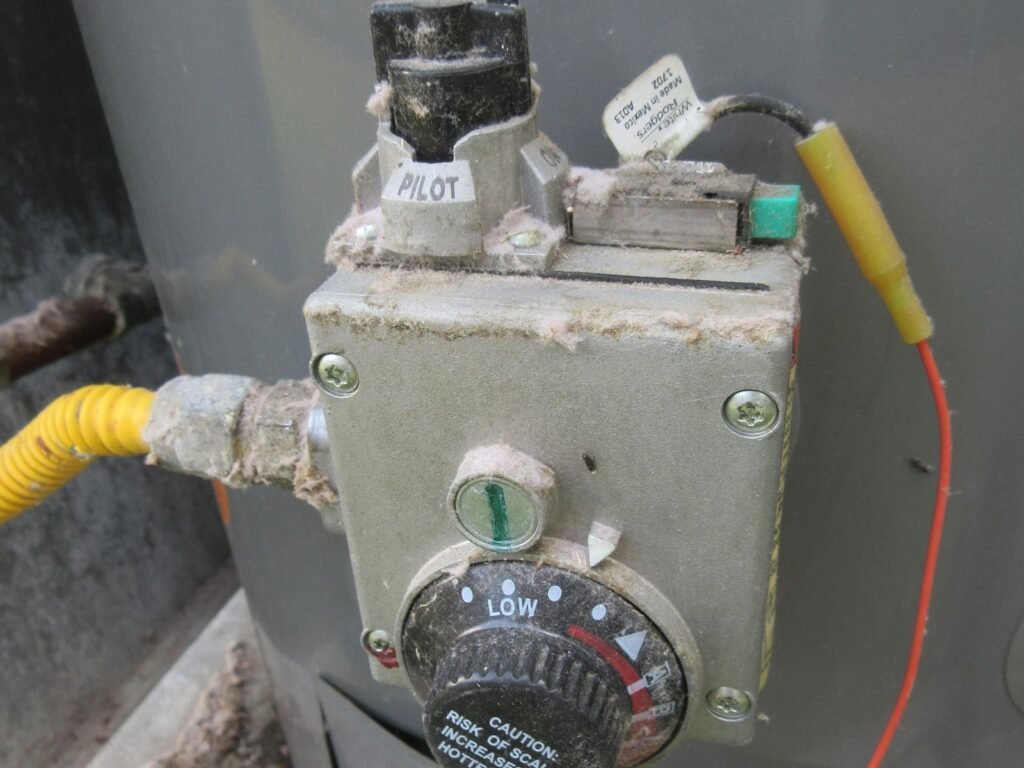
The pilot flame heats a thermocouple, a metal probe that turns heat into a tiny electric current. That current powers an electromagnet in the gas control valve that holds the gas open. When the pilot goes out, the thermocouple cools, the magnet lets go, and gas to the pilot and main burner shuts off.
State Water Heaters’ service handbook puts a healthy thermocouple at 20 to 30 millivolts and says it can take up to 180 seconds to cool enough to close the valve. That is why you hold the knob in while lighting, until the thermocouple is hot enough to take over.
Many newer controls use a thermopile, which makes far more voltage (at least 350 millivolts under load, per State’s handbook) and also runs the status light. An energy cutoff (ECO) and, on flammable vapor ignition resistant (FVIR) heaters, a thermal switch sit in the same circuit; when either trips, the pilot goes out and stays out.

Why does my water heater pilot light keep going out?
The most common causes are a weak or misaligned thermocouple, a dirty pilot orifice, and a tripped thermal switch or flammable vapor sensor on an FVIR heater, often because lint is blocking the air intake. Drafts, venting problems, low gas or propane, and a failing gas control valve account for most of the rest.
| What happens | Likely cause | Who fixes it |
|---|---|---|
| Goes out when you release the knob | Weak, loose or misplaced thermocouple; tripped thermal switch or ECO | Plumber |
| Small, yellow or flickering pilot | Dirty pilot orifice or tube | Plumber |
| Will not relight, or shows a lockout flash code (FVIR) | Thermal switch or flammable vapor sensor | Plumber, after finding the cause |
| Goes out every few days or after the burner runs | Short of combustion air, clogged intake screen or flame arrestor, vent problem | Clear the area; vent work needs a plumber |
| Goes out when a door opens, a fan runs or wind gusts | Drafts at the base or down the vent | Stop room drafts; vent work needs a plumber |
| Other gas appliances are out too, or propane ran low | Gas supply or pressure | Gas utility, propane supplier or plumber |
| Sizzling or water on the burner | Condensation after a cold fill, or a tank leak | Wait; call if water keeps coming |
| Everything else checks out | Faulty gas control valve | Plumber |
Thermocouple and pilot problems
Bradford White’s service manual lists a poor connection at the gas valve, a thermocouple not fully seated in the pilot bracket, a flame that does not wrap the tip, and a weak thermocouple; Rheem specifies a flame covering the top 3/8 to 1/2 inch of the tip. Both brands also list a clogged pilot orifice or tube, which gives a small, yellow pilot.
A plumber tests the thermocouple with a millivolt meter before replacing anything. On an FVIR heater the repair means opening and resealing the sealed inner door, and Bradford White warns a breached seal can cause a fire.
FVIR thermal switch or flammable vapor sensor
Most 30- to 50-gallon gas water heaters built since mid-2003 are FVIR designs, according to Rheem: the sealed combustion chamber draws air through a flame arrestor at the base, so spilled gasoline vapors cannot ignite outside. A thermal switch shuts everything down if vapors burn inside, or if lint, dust or oil clog the arrestor and starve the flame (Bradford White).
Bradford White’s switch opens at roughly 240 to 290°F and has a red reset button, but resetting it without fixing the cause can simply trip it again; State’s handbook says the usual cause is poor combustion from a blocked vent or a dirty filter or arrestor. Some A.O. Smith models add a flammable vapor sensor that locks out with a flash code, and heaters with electronic ignition flag a weak flame sense rod or failed ignition the same way. A discolored flame arrestor means vapors burned inside: do not relight, because A.O. Smith and Bradford White say the heater must be replaced.
Air supply, drafts and venting
Rheem’s pilot-outage bulletin checks for downdrafts through the vent, fans, air rushing under a door, cramped closets and, on direct vent models, wind blowing into the outside terminal. The code’s standard method calls for 50 cubic feet of indoor air per 1,000 Btu/h of input, so a 40,000 Btu/h heater alone needs 2,000 cubic feet.
A blocked or undersized vent can also spill carbon monoxide, so soot, scorch marks or water at the draft hood mean shut the heater off and call. Our guide to water heater venting, from atmospheric to power vent explains each system.
Gas supply or a failed gas control valve
If other gas appliances are out too, suspect the gas supply; on propane, call your supplier before relighting if the tank ran low. If the thermocouple, pilot, air and gas pressure all check out, the gas control valve is the likely culprit. Bradford White calls it non-repairable, and a tripped single-use ECO means replacing the whole control.
How to relight a water heater pilot light safely
Follow the lighting label on your heater, because the steps differ by brand and control. Typically you turn the control off, wait at least 10 minutes, set it to PILOT, hold the knob in while pressing the igniter until the pilot stays lit, then turn it to ON.
- Read the label. It takes priority over general guides like this one (A.O. Smith).
- Check for a gas smell around the heater and near the floor. If you smell gas, stop and leave.
- Turn the knob to OFF and wait at least 10 minutes. Some thermopile controls will not relight sooner.
- Set the knob to PILOT, push it in and hold it.
- Press the igniter repeatedly while watching through the sight glass; State’s handbook allows up to 90 seconds before you stop and wait again.
- Keep holding as long as the label says, or until the status light starts blinking.
- Release and watch. If the pilot stays lit, turn the knob to ON; HOT is about 120°F on many controls.
- Stop after two or three tries and call a plumber.
What you can check, and when to call a plumber
You can safely check the gas valve, propane, drafts and clutter around the heater. Anything inside the combustion chamber, on the gas control valve or gas piping, or in the vent is a job for a licensed plumber.
You can check:
- That the gas shutoff valve is open and other gas appliances work
- The propane tank level
- Paint, gasoline, cleaners and laundry near the heater; move them away
- The air intake screen at the base: with the heater off and cooled for 10 minutes, vacuum off lint, as A.O. Smith advises at least once a year
Call a plumber when:
- The pilot goes out again after you relight it
- A thermal switch has tripped or the control shows a lockout code
- The flame arrestor is discolored, or you see soot or scorch marks
- Water is dripping on the burner
If a carbon monoxide alarm sounds, get everyone out and call 911. Every repair is done by licensed plumbers covered by liability insurance, with a written, itemized quote first; see water heater repair in Fort Collins and gas water heater repair. If the pilot stays lit but the water is cold, see our no hot water in the house troubleshooting guide.
When repeated pilot outages point to replacement
A pilot problem alone rarely justifies a new heater, because thermocouples, pilot assemblies and gas control valves are replaceable. Replacement makes sense after a flammable vapor incident, when a leaking tank drips water onto the burner, or when a new gas valve is poor value on an old heater.
For scale, Angi’s December 2025 national repair guide puts a thermocouple repair at about $150 or less and a gas control valve at about $350 on average, and the U.S. Department of Energy says most storage water heaters last 10 to 15 years. We give honest repair-or-replace advice; see water heater replacement in Fort Collins when it is time.
Water heater pilot light FAQ
Why does my water heater pilot light keep going out?
Most often a weak or misplaced thermocouple, a dirty pilot, or a safety switch tripped by a clogged air intake or poor combustion air. Drafts, venting, the gas supply and a failing gas control valve come next.
How do I relight a water heater pilot light?
Follow the label: turn the control off and wait 10 minutes, set it to pilot, hold the knob in while pressing the igniter, keep holding until the pilot stays lit, then turn it to on. Never relight if you smell gas.
What does a thermocouple do on a water heater?
It sits in the pilot flame and turns heat into a small electric current that holds the gas valve open. If the pilot goes out, the current stops and the valve shuts off the gas.
Can I replace a water heater thermocouple myself?
On a modern FVIR heater it means opening and resealing the sealed combustion chamber, so we recommend a licensed plumber, who will also test whether the thermocouple was really the cause.
Is it dangerous if my pilot light keeps going out?
The outage is the gas valve’s safety shutoff working; the risk is the cause, such as a gas leak, flammable vapors or a blocked vent. Call if it keeps happening, and leave the house if you smell gas.
Keep reading
Related guides
Hot Water Smells Like Rotten Eggs? Causes and Fixes in Fort Collins
Hot water smells like rotten eggs? Why it happens, how an anode rod swap or chlorination fixes it, and when it is a gas leak.
Read guide
No Hot Water in the House? How to Troubleshoot Gas, Electric and Tankless Water Heaters in Fort Collins
No hot water in the house? Check the pilot, breaker or tankless error code first. Safe steps for gas, electric and tankless, and when to call.
Read guide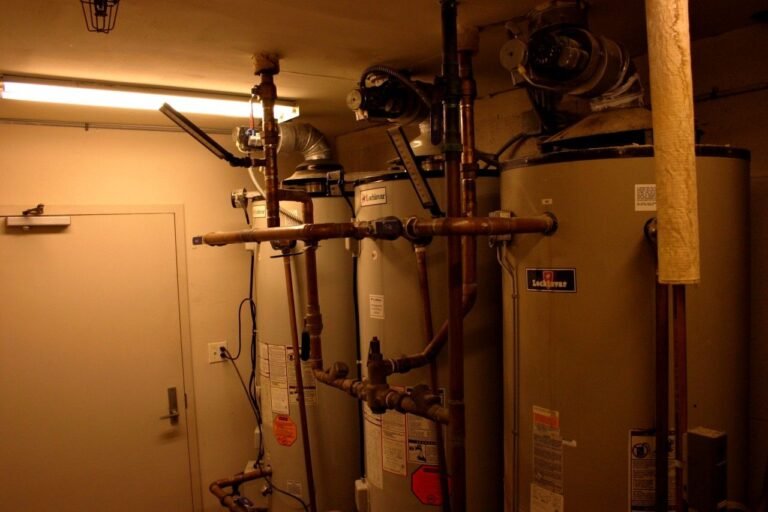
Water Heater Leaking in Fort Collins? How to Find the Source and What to Do
Water heater leaking from the top, bottom or relief valve? Find the source, what to do now and when it means a new tank.
Read guidePhoto credits (Wikimedia Commons): Water Heater Leaking in Fort Collins? How to Find the Source and What to Do: Wikimedia Commons, CC BY-SA 3.0.
Water heater trouble?
Call for a diagnosis and a written quote.
Call to have your pilot light, thermocouple or gas control valve repaired by a licensed plumber.

Water heater replacement, repair and tankless installation for Fort Collins, Loveland and Larimer County. Written, itemized quotes and licensed plumbers.
Call (970) 305-5633