

How Long Do Water Heaters Last? Lifespan, Warning Signs and When to Replace in Fort Collins
Tanks last 10 to 15 years and tankless over 20, per DOE. Warning signs, how to read your heater's age and when to replace it.
Most tank water heaters last 10 to 15 years and tankless units can last more than 20, according to the U.S. Department of Energy (DOE), while ENERGY STAR’s savings estimates for heat pump models assume 13 years. Sediment, a used-up anode rod and high water pressure shorten that span; draining sediment, checking the anode and controlling pressure stretch it. Fort Collins Water Heater Pros repairs and replaces water heaters in Fort Collins, Loveland and across Larimer County, and we tell you plainly when a repair still makes sense.
Call (970) 305-5633 if your water heater is leaking, rumbling or past 10 years old and you want a straight repair-or-replace answer.
Call nowHow long does a water heater last? Lifespan by type
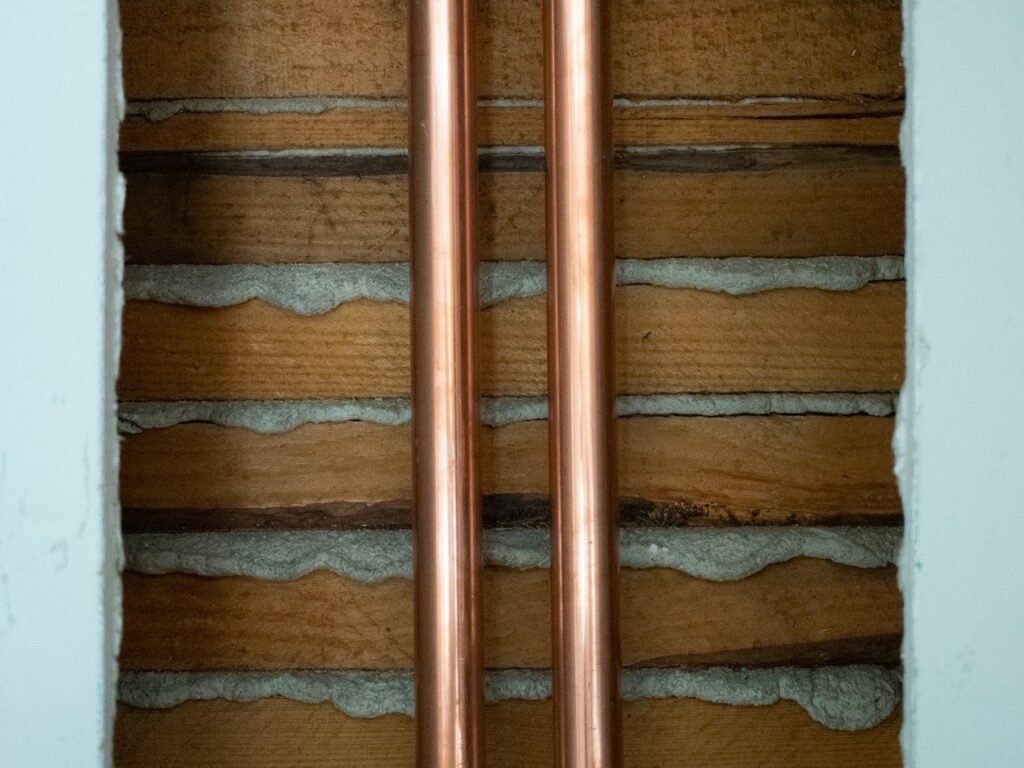
DOE puts a storage tank at 10 to 15 years and a tankless unit at more than 20. For heat pump models, the 13 years that ENERGY STAR and DOE’s Federal Energy Management Program use is an assumption for estimating savings, not a measured lifespan.
| Water heater type | Typical lifespan | Source |
|---|---|---|
| Tank (storage), gas or electric | 10 to 15 years | DOE |
| Gas tank | Often 8 to 12 years | Angi cost guide, July 2026 |
| Electric tank | May last 10 to 15 years | Angi cost guide, July 2026 |
| Tankless, gas or electric | More than 20 years | DOE |
| Heat pump (hybrid) | 13 years, assumed for savings estimates | ENERGY STAR; DOE |
DOE does not split tanks by fuel, but Angi’s cost guide does. A.O. Smith’s training manual shows how scale hits each type differently: in a gas tank it builds up on the bottom, overheating the steel until it eventually leaks; in an electric tank it coats the heating elements until they crack, and elements can be replaced.
For tankless units, DOE’s Building America guide warns that scale in the heat exchanger can restrict flow and shorten the unit’s life.
The Census Bureau’s American Community Survey (2020 to 2024) estimates that 85% of homes in Timnath were built in 2010 or later, as were more than half in Severance, Berthoud and Wellington and nearly half in Windsor. A house from the early 2010s that still has its original tank is now in or past DOE’s 10-to-15-year range.
What shortens a water heater’s life, and what extends it
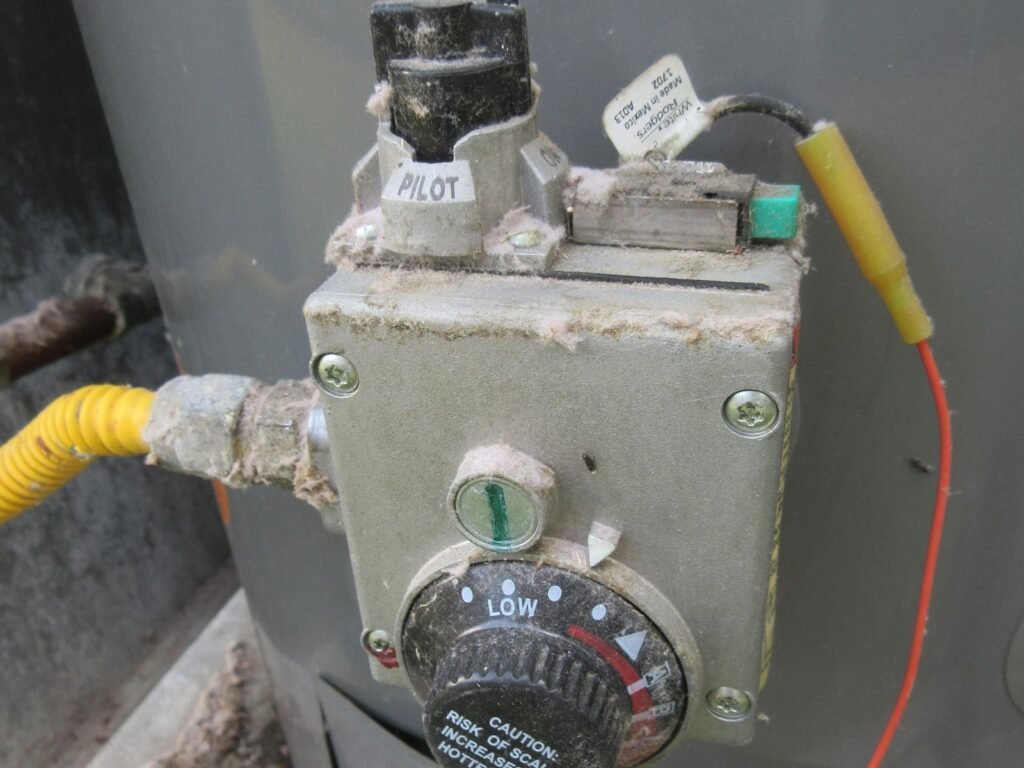
Tank water heaters usually fail through corrosion: once the steel rusts through, the tank leaks and cannot be repaired. Sediment, a spent anode rod and high or spiking water pressure all speed that up.
Sediment and scale. Tap water carries minerals that settle at the bottom of the tank. A.O. Smith says the amount depends on your water’s hardness and the temperature setting, and that draining sediment extends the heater’s life. Local water is soft, which helps: Loveland’s 2025 water quality report averages 24 mg/L of hardness, about 1.4 grains per gallon, and Fort Collins Utilities calls its water naturally soft.
The anode rod. The steel tank is lined with glass, and a sacrificial anode rod of aluminum, magnesium or an aluminum-zinc alloy corrodes in place of the steel wherever the lining has gaps (A.O. Smith). Once the rod is used up, the steel loses that protection. A.O. Smith and Bradford White both say a water softener makes the anode wear faster, and Loveland’s utility says its customers don’t need one. Rheem warns that running a tank without its anode greatly shortens its life.
Water pressure and thermal expansion. The plumbing code caps static water pressure at 80 psi, and A.O. Smith says high pressure can damage water heaters and cause premature leaks. Pressure also spikes each time the heater runs if the plumbing is closed, meaning a pressure-reducing valve (PRV), check valve or backflow preventer keeps heated water from expanding back toward the main. Rheem’s thermal expansion bulletin says those repeated spikes can speed up tank leaks and shorten the heater’s life. The fix is an expansion tank where the code calls for one, supported on its own rather than hung from its pipes, as Colorado’s plumbing code requires.
Temperature setting. DOE recommends 120°F for most homes; hotter settings raise the scalding risk.
| Maintenance task | How often | Source |
|---|---|---|
| Drain sediment from the tank | A quart every 3 months | DOE |
| Drain and flush the whole tank | After the first 6 months, then yearly, or more often if sediment is heavy | A.O. Smith |
| Inspect the anode rod | Every 3 to 4 years (DOE); yearly, and more often with softened water (A.O. Smith) | DOE; A.O. Smith |
| Test the temperature and pressure (T&P) relief valve | Every 6 months | Rheem |
| Flush or descale a tankless unit | Twice a year to once every 3 years, per the manufacturer | DOE Building America |
Before draining, turn off the gas or power, close the cold-water supply and let the water cool, which A.O. Smith says can take 10 minutes or more. Sediment in a neglected tank can clog the drain valve, so if it will not drain, call a plumber.
Signs your water heater is going out

The clearest sign is water seeping from the tank itself, because a leaking tank cannot be repaired. Rumbling, less hot water, rusty hot water and a relief valve that keeps discharging are warnings worth acting on, especially on a heater past 10 years.
| Sign | What it usually means | Repair or replace? |
|---|---|---|
| Water seeping from the tank or from under its jacket | The tank has corroded through | Replace |
| Rumbling or popping | Scale and sediment on the tank bottom | Flush; on an older tank, plan a replacement |
| Less hot water than before | Sediment, or a failed element or thermostat on an electric heater | Often repairable |
| Rusty or discolored hot water | Possibly corrosion inside the tank or a spent anode | Have the anode and tank checked |
| Relief valve dripping after each heating cycle | Thermal expansion or high water pressure | Fix the pressure problem |
| Bulged top or bottom | Severe over-pressure; on a Rheem tank, more than 300 psi, which its warranty does not cover | Replace |
How to tell how old your water heater is

Read the serial number on the rating plate, the label on the side of the tank. Most brands code the manufacture date into it, each in its own way:
| Brand | How the serial number shows the date | Example |
|---|---|---|
| Bradford White | First letter is the year, second letter is the month (A for January through M for December, skipping I). Year letters repeat every 20 years. | NC: March 2016 (or 1996) |
| Rheem and Ruud, newer units (from 2012) | A plant letter, then two digits for the week and two for the year | M141209135: week 14 of 2012 |
| A.O. Smith | First two digits are the year, the next two the week | 1719…: week 19 of 2017 |
Bradford White says the number part of its serials ran seven digits before December 2007 and eight after, which settles the decade. Rheem units made before 2012 start with the month and then the year, and Rheem’s newer labels print the manufacture date. For other brands, look up the serial number on the manufacturer’s website or call the number on the label.
The date matters for warranty too: Rheem bases its warranty on the manufacture date, and A.O. Smith falls back to the manufacture date if you cannot prove when the heater was installed, so keep your invoice.
Should you repair or replace your water heater?
Repair when the tank is sound and a replaceable part has failed; replace when the tank leaks, has bulged or has been flooded, or when the heater is near the end of its expected life and needs a major repair.
Most parts can be replaced: the thermocouple, igniter, heating element, thermostat, T&P valve, drain valve, dip tube and anode rod. The tank cannot, and A.O. Smith says a heater that has been flooded or had its thermostat under water must be replaced entirely.
For scale, Angi’s repair cost guide (updated December 17, 2025) puts a thermocouple at about $150 or less, a gas control valve at about $350 on average and an electric heating element at $200 to $300. Angi’s replacement guide (updated July 20, 2026) puts a tank-style replacement at $882 to $1,825, with an average of $1,346. These are national figures; our water heater replacement cost guide covers what drives the price here.
Age is the tiebreaker. A new gas control valve makes sense on a three-year-old heater; on a 13-year-old tank it buys a part for a heater already well into DOE’s 10-to-15-year range. If pressure is the problem, fix it first, because a new tank without a required expansion tank or PRV faces the same spikes as the old one.
Plan your replacement before it fails
If your tank is past 10 years and showing any of these signs, replace it on your schedule, not the day it floods the basement. That leaves time to compare options, check the venting and wiring, and get written quotes.
- Choose the type and fuel. Our guides to tankless water heater pros and cons and the gas vs electric water heater decision cover the trade-offs.
- Permit and inspection. Colorado requires a licensed plumber working for a state-registered plumbing business to install or replace a water heater under a permit. Homeowners may do their own only if the home is not for sale, resale, a flip or a rental, and they still need the permit and inspection. In Fort Collins, the Fast-Track water heater permit is $65 per heater plus sales tax on the job’s value.
- Code upgrades. A replacement can call for an expansion tank on closed plumbing, a pressure test on new plastic vent pipe and a carbon monoxide alarm within 15 feet of each bedroom entrance, which state law requires when a fuel-fired appliance is replaced under a permit.
- Gas models. Since January 1, 2026, new natural gas water heaters sold in Colorado must meet the state’s ultra-low NOx limit or be ENERGY STAR certified unless they were already in Colorado stock; propane models are exempt until 2031, and the rule does not require you to replace a working heater.
Our plumbers pull the permit and schedule the inspection on every replacement, and our written, itemized quote lists the heater, parts, permit, code upgrades and haul-away of the old tank. Leaking tanks are scheduled first. See how we handle water heater replacement in Fort Collins.
Water heater lifespan FAQ
How long do water heaters last?
Most storage tank water heaters last 10 to 15 years and tankless units more than 20, according to DOE. ENERGY STAR’s savings estimates for heat pump models assume 13 years.
How long does a tankless water heater last?
DOE says more than 20 years. Scale shortens that, so flush or descale the unit as often as its manufacturer specifies, which ranges from twice a year to once every three years.
How often should you replace a water heater?
There is no fixed schedule. Replace it when the tank leaks or a major repair comes up late in its life, and start planning once a tank passes about 10 years.
What are the signs a water heater is going out?
Water seeping from the tank, rumbling or popping, less hot water than before, rusty hot water and a relief valve that keeps discharging. A leaking tank cannot be repaired.
How can I tell how old my water heater is?
Read the serial number on the rating plate. Bradford White codes the year and month in its first two letters, A.O. Smith puts the year in the first two digits, and Rheem’s newer serials show the week and year after a plant letter.
Do gas or electric water heaters last longer?
DOE gives one range, 10 to 15 years, for both. Angi’s July 2026 cost guide says gas tanks often last 8 to 12 years and electric tanks 10 to 15.
Keep reading
Related guides
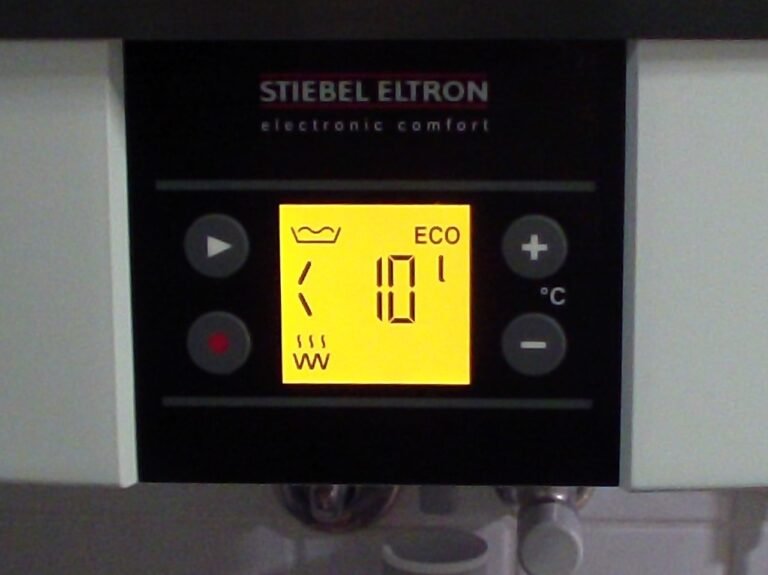
Gas vs Electric Water Heater: Which Is Right for Your Fort Collins Home?
Gas vs electric water heater: cost, running cost, recovery, lifespan, venting, heat pump models and Colorado’s 2026 rules.
Read guide
Power Vent Water Heater vs Atmospheric, Direct Vent and Condensing: Venting Types and Larimer County Rules
How a power vent water heater compares with atmospheric, direct vent and condensing models, plus Larimer County vent rules. Call before you replace.
Read guide
What Size Water Heater Do I Need? A Fort Collins Sizing Guide
What size water heater do you need? Tanks by first-hour rating, tankless by flow and rise at Fort Collins altitude. Call (970) 305-5633 for help.
Read guidePhoto credits (Wikimedia Commons): Gas vs Electric Water Heater: Which Is Right for Your Fort Collins Home?: Pittigrilli, CC BY-SA 4.0.
Water heater trouble?
Call for a diagnosis and a written quote.
Call for honest repair-or-replace advice and a written, itemized quote on your next water heater.

Water heater replacement, repair and tankless installation for Fort Collins, Loveland and Larimer County. Written, itemized quotes and licensed plumbers.
Call (970) 305-5633