

How to Descale a Tankless Water Heater: Steps and How Often
How to descale a tankless water heater with a pump and vinegar, per Rinnai, Navien and Noritz manuals, and how often on Fort Collins' soft water.
To descale a tankless water heater, shut off its power, gas and water, connect a small pump and hoses to the service ports on its isolation valves, and circulate white vinegar or a tankless descaler through the heat exchanger for 45 minutes to an hour; then rinse with fresh water and clean the inlet filter. On city water in Fort Collins, Loveland and Longmont, scale builds slowly: every local utility that publishes a hardness figure reports 14 to 35 mg/L, so your manufacturer’s soft-water schedule applies. Fort Collins Water Heater Pros services tankless heaters across Larimer County, and these steps follow the Rinnai, Navien and Noritz manuals.
Call (970) 305-5633 if you’d rather have our plumbers flush the unit and check its burner, vent and filters in the same visit.
Call nowWhat scale does inside a tankless water heater
Scale is the calcium and other minerals that heated water leaves on the heat exchanger. The U.S. Department of Energy’s (DOE) Building America guide says it restricts flow through the heat exchanger and can shorten the unit’s life, and Rinnai notes that it builds faster at high temperature settings.
Rinnai’s SS service reminder and Navien’s E760 flushing alarm prompt a flush, and overheat codes such as Rinnai 14 or Navien E016, or falling flow, can point to scale. Our guide to tankless water heater error codes explains each one.
Is Fort Collins water hard? What the utilities measure

No. Every local supply that publishes a hardness figure measures soft, 14 to 35 mg/L as calcium carbonate (about 0.8 to 2 grains per gallon), and East Larimer County Water District (ELCO) defines soft as under 75 mg/L.
| Water supply | Latest report | Total hardness | Grains per gallon |
|---|---|---|---|
| Town of Estes Park | 2026 report, 2025 data | 14 mg/L | About 0.8 |
| City of Longmont | 2025 report | 19 to 25 mg/L, average 21.7 | About 1.3 |
| City of Loveland | 2025 report | 24 mg/L yearly average | 1.4 |
| Soldier Canyon plant (supplies ELCO and the Fort Collins-Loveland and North Weld water districts) | 2025 quarterly reports | 21 to 32 mg/L | 1.2 to 1.9 |
| Central Weld County Water District | 2025 report | 33 mg/L average | 1.9 |
| East Larimer County Water District (ELCO) | 2026 report, 2025 data | About 35 mg/L | About 2 |
| Fort Collins Utilities | 2025 report | No figure; calls its water naturally soft | n/a |
Rinnai’s manual sets a 200 mg/L hardness limit, so even the highest local figure is under a fifth of it. Some plumbing websites describe Loveland water as 10 to 17 grains per gallon; Loveland’s own 2025 report averages 1.4.
How often to descale a tankless water heater on soft water
Follow your manual, and let your water’s measured hardness decide where in its range you land. On local city water, that usually means the long end of the manufacturer’s options, confirmed at a yearly inspection.
Navien’s NPE-2 installation manual ties flushing to hardness:
| Hardness (Navien’s terms) | Treatment Navien lists | Flushing for homes without treatment |
|---|---|---|
| Soft, up to 60 mg/L | None | None set |
| Moderately hard or hard, 61 to 160 mg/L | Softener or Navien PeakFlow recommended | Once a year |
| Very hard, 161 to 200 mg/L | Highly recommended | Once a year |
| Extremely hard, over 200 mg/L | Required | Once a year |
Rinnai’s RU manual leaves the interval to the installer, who can set its Service Soon reminder to six months, one year or two years based on water conditions; the same manual requires a yearly inspection by a licensed professional. Navien’s NPE-2 has a descaling reminder of 6, 12 or 24 months; both reminders are off by default. DOE’s Building America guide puts manufacturer intervals between twice a year and once every three years.
Flush sooner if a scale or overheat code appears or flow drops, and keep the setting moderate: Rinnai says high settings speed scale, and DOE recommends 120°F for most homes.
Is it safe to descale a tankless water heater yourself?
It can be, with power and gas off and the manual in hand, but manufacturers lean toward a professional: Rinnai’s RU manual calls for maintenance by a licensed professional, Noritz writes its current procedure for qualified service professionals, and Navien calls flushing somewhat complicated and warns that improper maintenance can void the warranty.
- Power and gas off first. Unplug the heater or switch off its breaker; Rinnai notes the controller’s off button doesn’t cut the power. Never adjust the gas valve, burner or wiring.
- Let it cool. Water inside stays hot after shutdown, and Rinnai warns that water above 125°F can cause severe burns.
- One solution at a time. Never mix a descaler with vinegar, bleach or another cleaner; the CDC warns that household bleach can release chlorine gas when mixed with certain other cleaning products.
- Smell gas? Leave the house and call your gas utility from outside.
- Leave the relief valve alone. Rinnai says testing it is a job for a licensed professional because the discharge can scald.
What you need to descale a tankless water heater
- A bucket of at least 5 gallons
- A small submersible or circulation pump; Rinnai recommends about 4 gallons per minute (gpm)
- Three hoses that thread onto your isolation valves’ service ports
- The solution your manual names: four gallons of undiluted food-grade white vinegar (Rinnai); white vinegar or a tankless descaler (Navien); three to four gallons of distilled food-grade white vinegar (Noritz’s homeowner guide), or a gallon of calcium, lime and rust remover with a gallon of water (Noritz’s newer procedure)
Isolation valves make this possible by closing the heater off from the house and giving each side a service port. Rinnai strongly recommends them and includes a set with its RU heaters. If yours has none, adding them means cutting into the water lines, which is a job for a plumber.
How to descale a tankless water heater, step by step
These steps follow Rinnai’s RU manual, noting Navien and Noritz differences; where your model’s manual differs, follow it.
- Shut it down. Turn the heater off at its controller, unplug it or switch off its breaker, and close the gas valve below it. Noritz’s 2015 homeowner guide instead keeps power on with the gas off and expects a code 11 during the flush; don’t reset it until the end.
- Isolate it. Close the hot and cold isolation valves and let the unit cool.
- Connect the hoses. Run a hose from the pump outlet to the cold-side service port, put a second hose on the hot-side port with its end in the bucket, and drop the pump’s inlet hose in the bucket.
- Add the solution. Pour in what your manual specifies; for Rinnai, four gallons of vinegar.
- Circulate. Open both service ports and run the pump: at least 1 hour at about 4 gpm for Rinnai, at least 45 minutes for Navien, and at least an hour for Noritz, which suggests fresh vinegar after 30 minutes.
- Rinse. Move the hot-side hose to a drain, sink or outdoors. Close the cold service port, open the cold isolation valve (leave the hot one closed) and let fresh water run through for 5 minutes. Noritz says at least 5 minutes or 20 gallons, plus opening the drain cock on its condensing models.
- Clean the inlet filter screen. Close the cold isolation valve, let the unit drain, unscrew the filter, rinse out the residue and reinstall it.
- Put it back in service. Close the service ports, remove the hoses, open both isolation valves and run a hot tap to confirm water flows. Then restore gas and power and check for leaks.
- Reset the reminder. On a Rinnai, press the On/Off button five times within five seconds to clear SS; other brands reset as their manuals direct.

How to clean a tankless water heater’s air filter
Indoor models also have an air intake filter. Navien says to clean it every 3 to 4 months on its NPE models, because a clogged one stops the heater with error 110, and Rinnai’s RU manual says to inspect it periodically and wash it with mild dish soap and a soft brush. Both sit behind the front cover; turn the power off first, or leave the filter for the yearly service.
Do you need a water softener for a tankless water heater?
On city water here, usually not. Loveland’s utility says its customers don’t need a water softener, Longmont’s 2025 report says a softener is not recommended, and Navien lists no treatment for water up to 60 mg/L. A softener also wears out a tank heater’s anode rod faster, A.O. Smith notes.
A private well is different. State permit records show dozens of domestic wells within a mile of LaPorte, Bellvue and Masonville, and no utility report covers them. Colorado State University’s Soil, Water and Plant Testing Laboratory tests private wells, and its household drinking water panel includes total hardness.
Compare the result with your manual. Rinnai’s limits include 200 mg/L of hardness, 0.3 mg/L of iron, 0.05 mg/L of manganese and a pH of 6.5 to 8.5, while Navien recommends a softener or its PeakFlow system from 61 mg/L and requires one above 200.
When to call a plumber instead
- The heater has no isolation valves, or they won’t open or seal
- Scale or overheat codes come back soon after a flush
- Any leak, gas smell or carbon monoxide alarm
- A condensing unit’s neutralizer is due; Navien recommends a yearly pH test
Our tankless water heater repair service covers descaling, filter cleaning and a burner and vent check, with a written, itemized quote first. Nationally, This Old House’s tankless cost guide (updated June 12, 2026) puts annual descaling at around $100-$500. Tank heaters need a different job, covered in how to flush a water heater, and if a new heater makes more sense, see water heater replacement in Fort Collins.
Tankless descaling FAQ
How often should you descale a tankless water heater?
As often as your manual says for your water’s hardness. On local city water at 14 to 35 mg/L, Navien’s NPE-2 table sets no flushing interval and Rinnai’s reminder can run up to two years, though Rinnai still requires a yearly inspection.
Can I use vinegar to descale a tankless water heater?
Yes, if your manual allows it. Rinnai specifies four gallons of undiluted food-grade white vinegar, Navien allows white vinegar or a tankless descaler, and Noritz’s newer procedure uses a calcium, lime and rust remover instead.
Do I need a water softener for a tankless water heater?
Not on most city water here: Loveland says its customers don’t need one, and Longmont doesn’t recommend one. On a private well, test first, since Navien recommends treatment from 61 mg/L and requires it above 200 mg/L.
Is flushing the same as descaling a tankless water heater?
Yes. Manufacturers call it flushing the heat exchanger, and it means circulating a descaling solution through it. Flushing a tank heater is a different job that drains sediment from the tank.
Can descaling it myself void the warranty?
It can if it’s done wrong. Navien warns that improper maintenance can void its warranty, and Noritz says unauthorized use of its descaling procedure may void coverage.
Keep reading
Related guides

Are Heat Pump Water Heaters Worth It? Pros, Cons and Payback in Fort Collins
Are heat pump water heaters worth it? Honest pros and cons, a payback example with 2026 rebates and Colorado winter tips.
Read guide
Tankless Water Heater Pros and Cons: Tank vs Tankless in Fort Collins
Tankless water heater pros and cons vs a tank: cost, lifespan, flow limits, altitude derating and when a heat pump fits better.
Read guide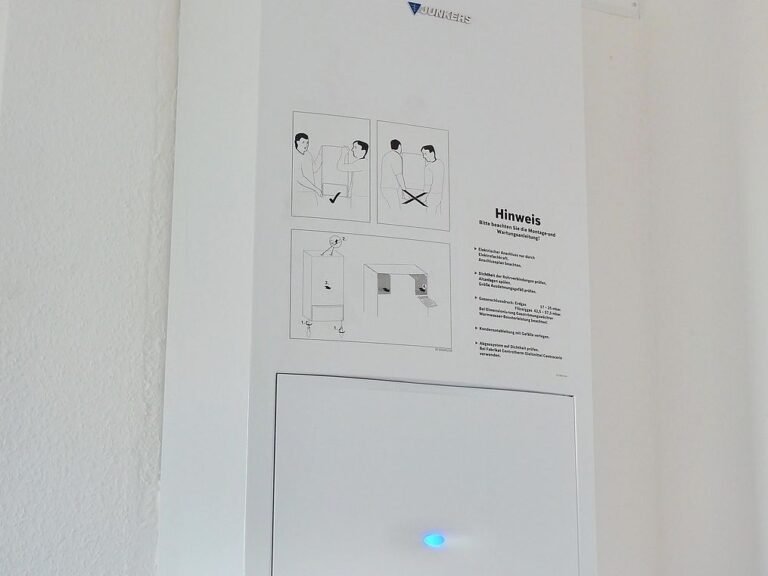
Tankless Water Heater Error Codes: What Rinnai Code 11 and 12, Navien E003 and Noritz 11 Mean
Rinnai code 11 means no ignition and code 12 a lost flame. What Rinnai, Navien and Noritz codes mean, safe checks and when to call a plumber.
Read guidePhoto credits (Wikimedia Commons): Tankless Water Heater Pros and Cons: Tank vs Tankless in Fort Collins: Downtowngal, CC BY-SA 4.0.
Water heater trouble?
Call for a diagnosis and a written quote.
Call to have a tankless water heater descaled and checked in Fort Collins, Loveland or anywhere in Larimer County.

Water heater replacement, repair and tankless installation for Fort Collins, Loveland and Larimer County. Written, itemized quotes and licensed plumbers.
Call (970) 305-5633